


Unveiling the Future of AI: Highlights from the vLLM Beijing Meetup on August 2, 2025
On August 2, 2025, Tencent’s Beijing Headquarters became a focal point for over 260 developers, engineers, and industry experts during the vLLM Beijing Meetup. This event marked a significant milestone in the trajectory of large model inference, showcasing the rapid advancements within the vLLM ecosystem and its real-world applications. The gathering provided an excellent platform for collaboration and discussion among leading tech companies, including Tencent, Huawei, Ant Group, ByteDance, Moonshot AI, and Xiaomi.
- A Deep Dive into vLLM: What Was Unveiled
- 1. Overview of vLLM and Its Advancements
- 2. Enhanced Efficiency through PD Disaggregation
- 3. Optimizing Large-Scale Distributed Inference on Ascend
- 4. Achieving a 10x Performance Boost
- 5. AIBrix: Innovation in Control Plane Efficiency
- 6. Kimi K2: Navigating Inference and Training Demands
- 7. Native PD Disaggregation via NCCL
- The Future of vLLM: Building a Robust Ecosystem
A Deep Dive into vLLM: What Was Unveiled
1. Overview of vLLM and Its Advancements
KaiChao You, a core maintainer of vLLM, kicked off the event with a revealing presentation on the project’s developmental journey. He explored the core technologies that underpin vLLM, emphasizing breakthroughs in large-scale distributed inference and multimodal support. Attendees learned about the latest advancements in scheduling strategies and extensibility, setting the stage for future enhancements that promise extreme performance optimization and broader hardware compatibility.
2. Enhanced Efficiency through PD Disaggregation
Chao Zhang from Tencent shared insights into a customized Prefill-Decode (PD) disaggregation framework that significantly enhances inference efficiency. By decoupling the compute-critical path in vLLM, this innovative solution has been deployed across multiple Tencent business scenarios, proving its value as a reusable, enterprise-grade framework capable of handling high-concurrency large model services.
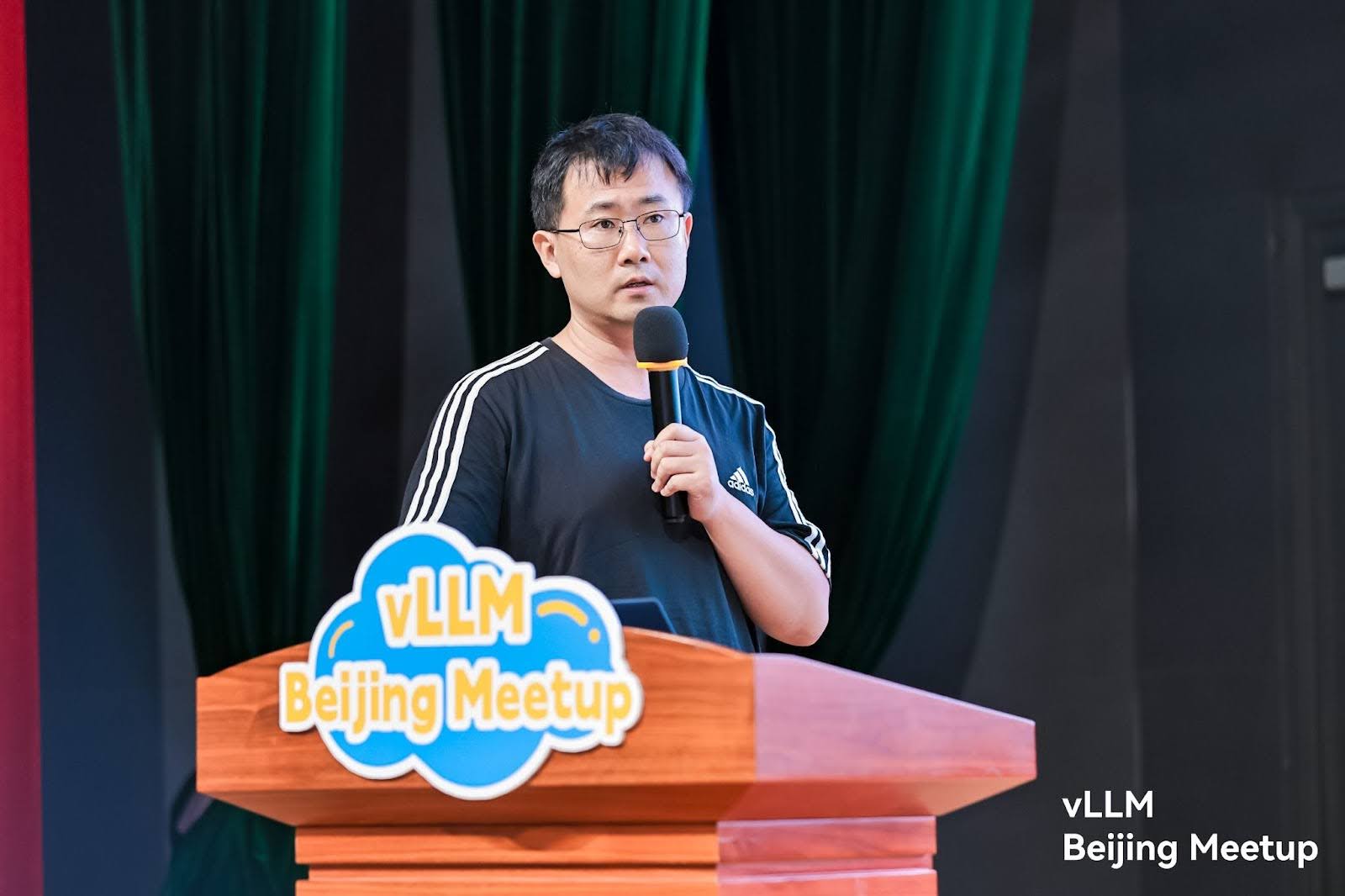
3. Optimizing Large-Scale Distributed Inference on Ascend
The vLLM Ascend project team, represented by Xiyuan Wang and Jie Wen, took attendees through their remarkable work adapting vLLM to the Ascend AI hardware. They provided updates on recent achievements, including improved feature support and version releases, while demonstrating how vLLM can be optimized for large-scale distributed inference using specific case studies—particularly illustrating the DeepSeek large-scale scenario.
More Read

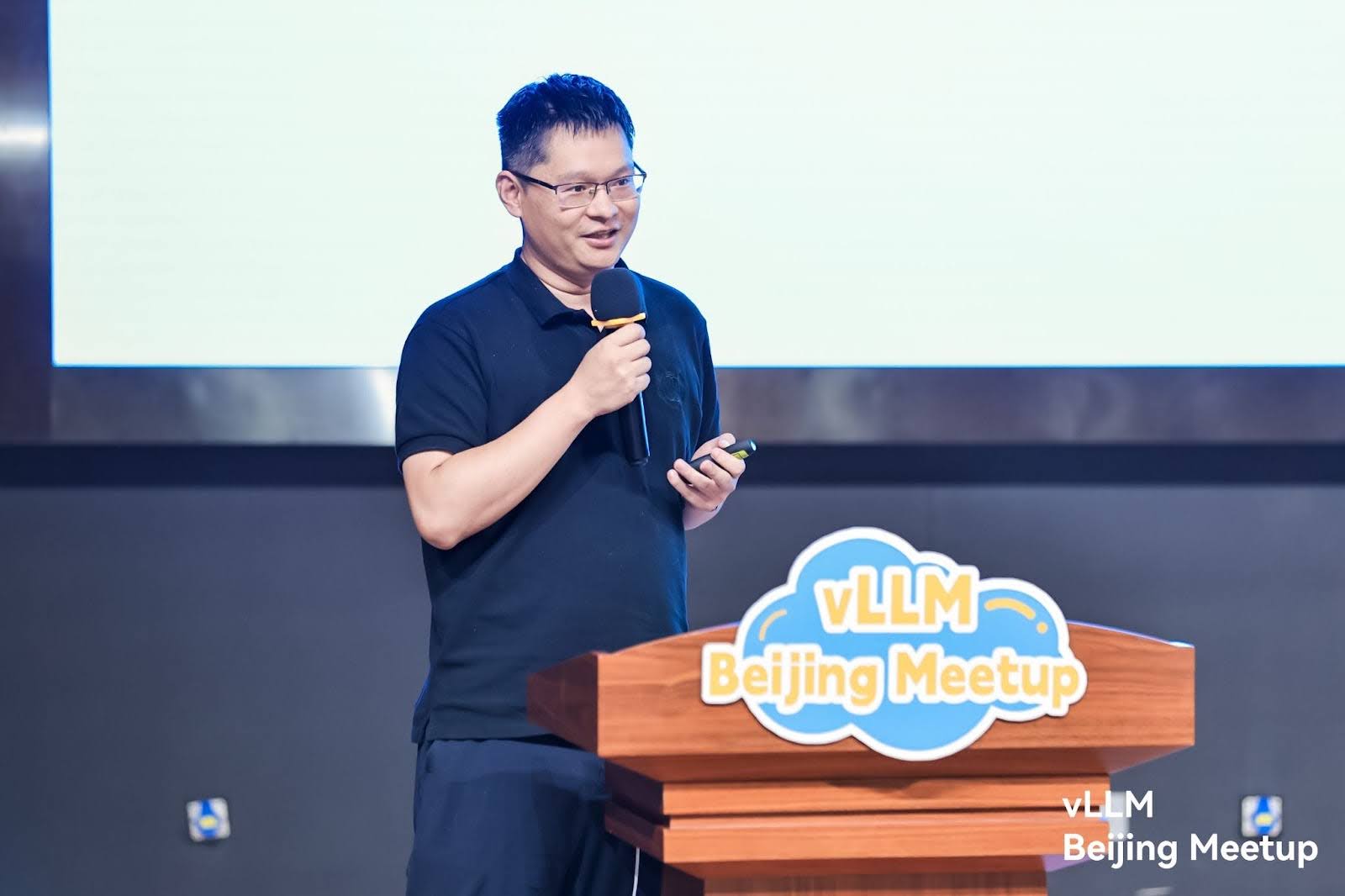
4. Achieving a 10x Performance Boost
Wengang Chen and Shoujian Zheng from Ant Group’s infrastructure team captivated their audience with effective optimization strategies that led to a tenfold improvement in DeepSeek’s inference performance. Their discussion spanned GPU memory optimizations, latency reduction techniques, and the practical application of the PD disaggregation architecture, delivering actionable insights for engineers seeking to enhance system performance.
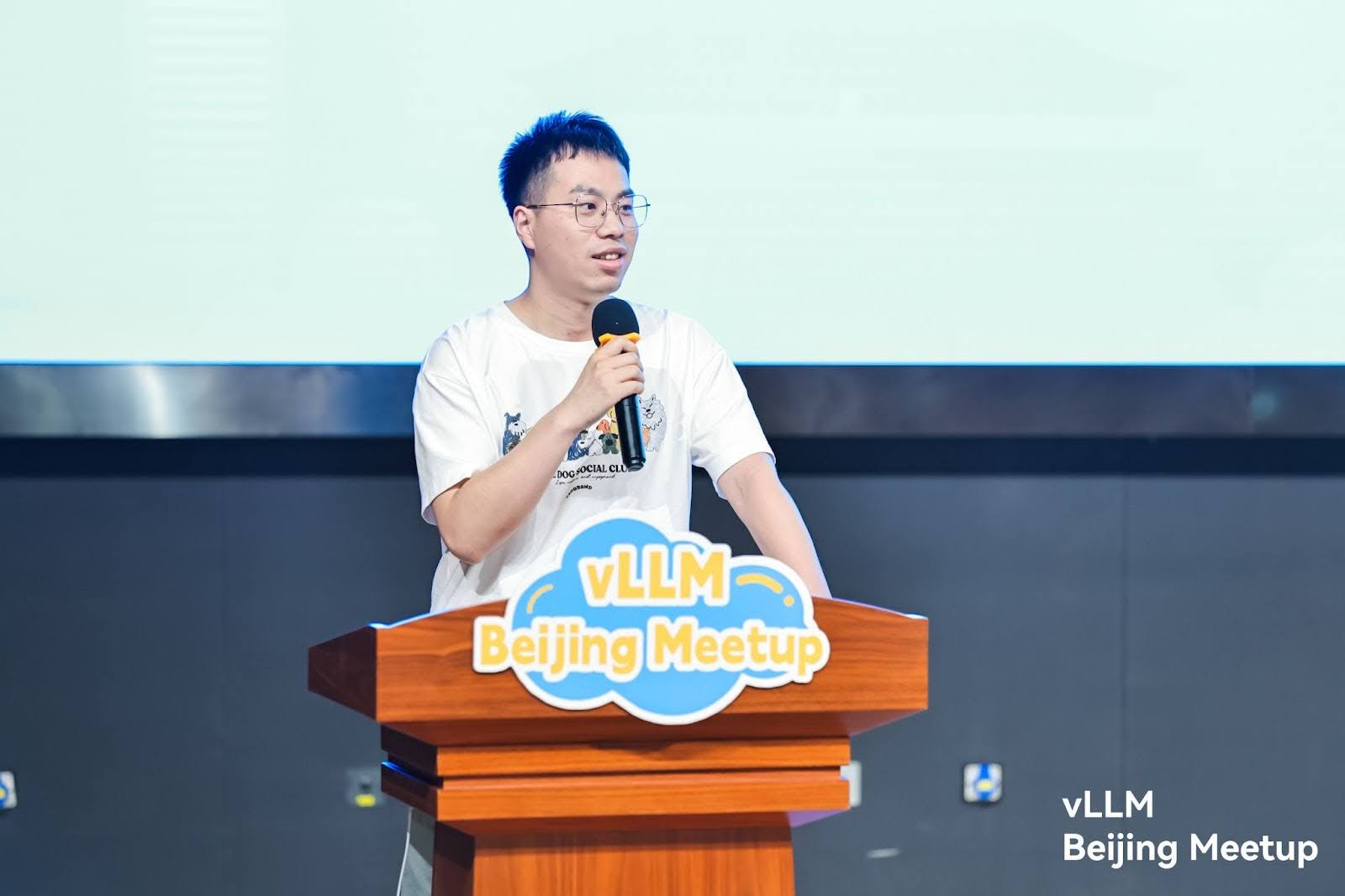
5. AIBrix: Innovation in Control Plane Efficiency
Jiannan Tan from ByteDance introduced AIBrix v0.4.0, a control plane designed for large-scale inference that prioritizes both efficiency and cost-effectiveness. Leveraging insights from extensive online workload practices, Tan detailed how AIBrix integrates with vLLM’s inference engine, promising significant resource savings and improved overall efficiency.
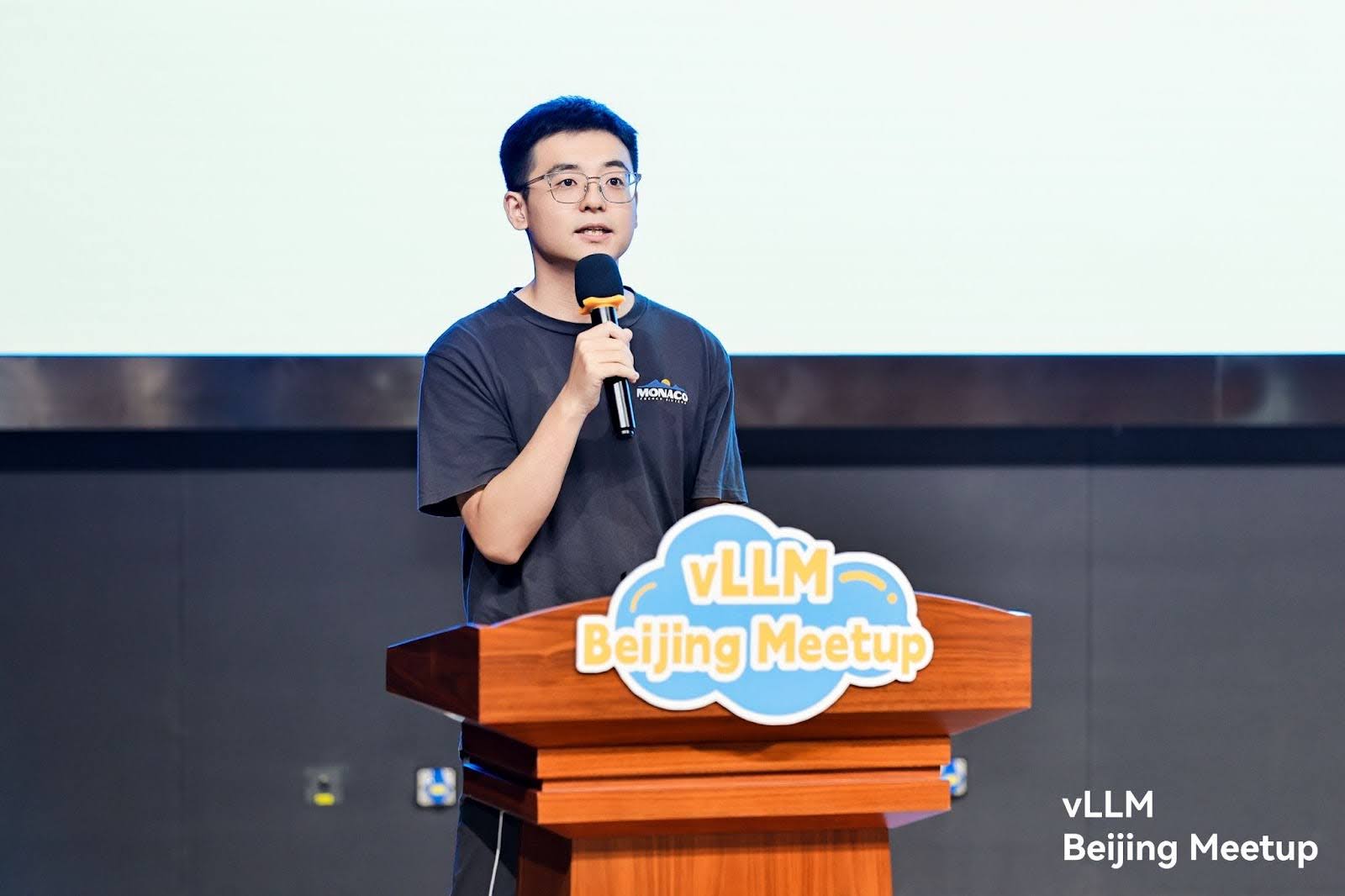
6. Kimi K2: Navigating Inference and Training Demands
In a compelling presentation, Weiran He from Moonshot AI shared firsthand experiences with the Kimi K2 model, which operates under strict service-level objectives (SLOs). He elaborated on the challenges of balancing high-concurrency online inference with reinforcement learning training, emphasizing coordinated architecture and deployment strategies tailored to varying hardware resources.
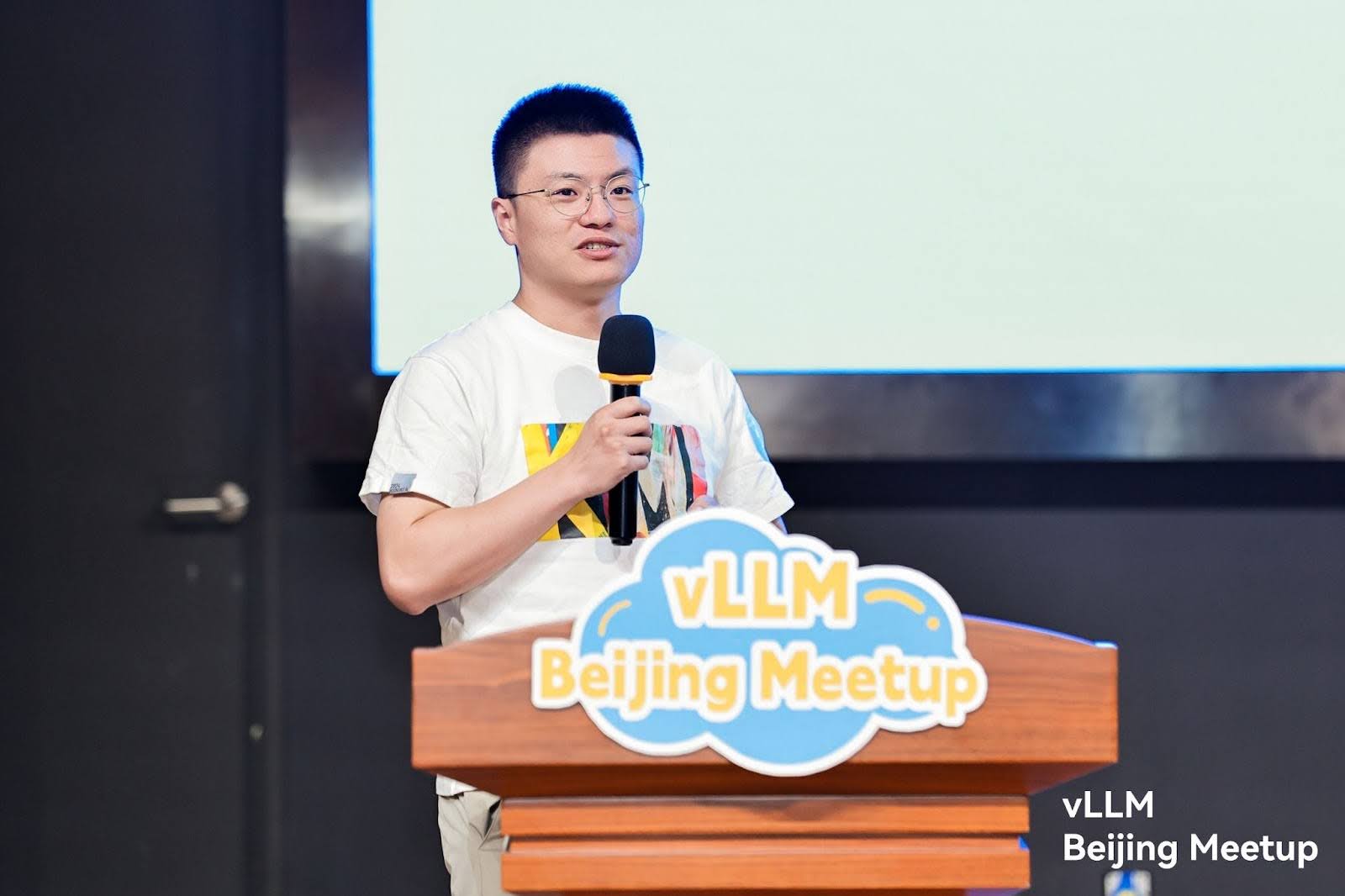
7. Native PD Disaggregation via NCCL
Zhonghua Deng from Xiaomi introduced a cutting-edge native PD disaggregation solution using point-to-point NCCL (NVIDIA Collective Communication Library) communication. His presentation included thorough explanations of the design principles behind this architecture and how it contributes to exceptional performance improvements, alongside real-world deployment cases that emphasized collaboration within the vLLM open-source ecosystem.
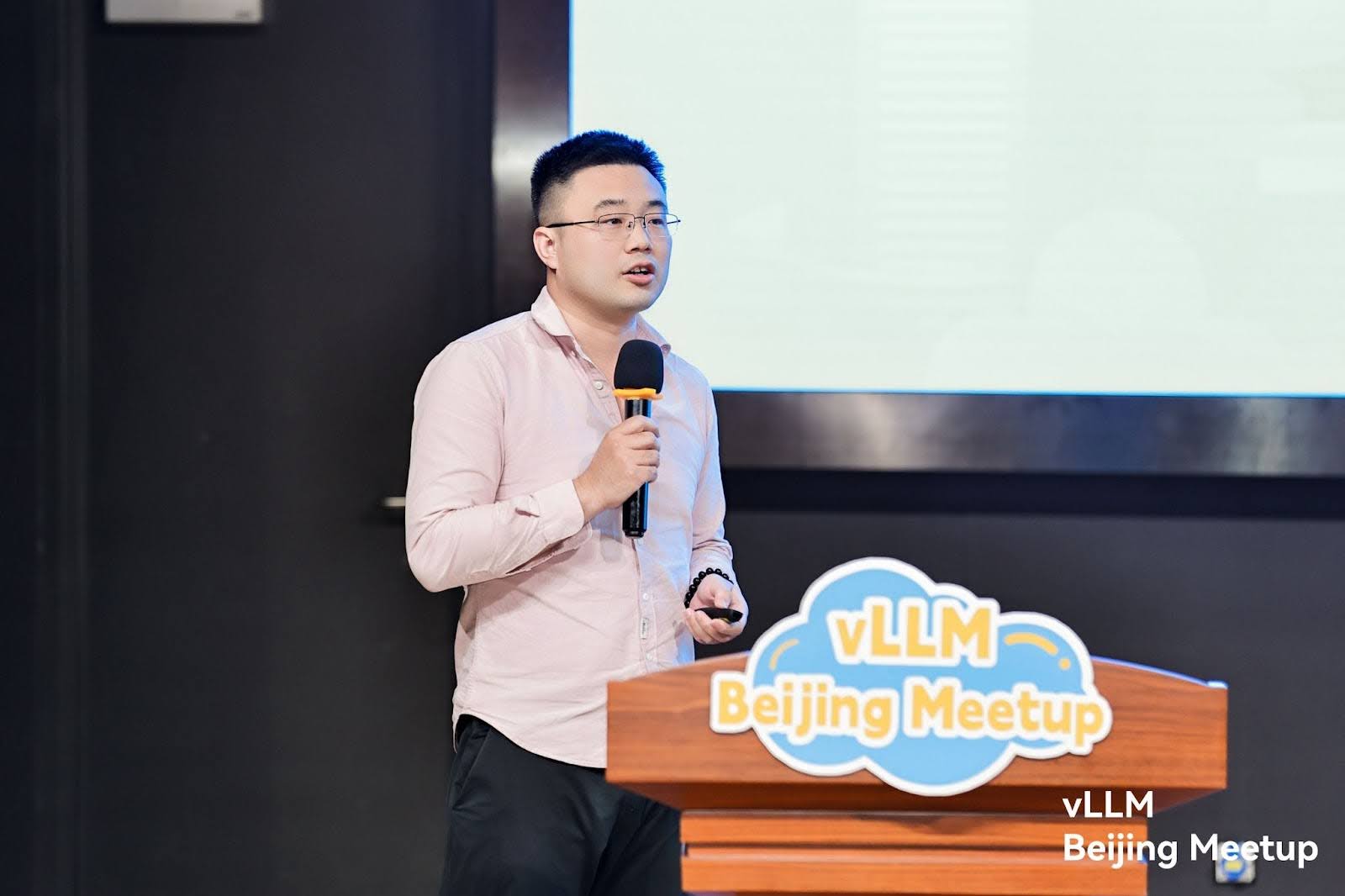
The Future of vLLM: Building a Robust Ecosystem
The vLLM Beijing Meetup has underscored the continuous evolution of its core functionalities and the ongoing enhancement of the hardware ecosystem. With its increasing maturity in control plane and deployment solutions, vLLM stands poised to support the practical adoption of large models across diverse industries.
As the event drew to a close, participants reflected on the wealth of knowledge exchanged and the collaborative spirit that emerged. The anticipation for the next gathering was palpable, as industry experts looked forward to witnessing even more groundbreaking advancements within the vLLM ecosystem.
Engaging with the vLLM Community
Whether you’re a seasoned developer or an enthusiastic newcomer, the vLLM community is welcoming and active. Don’t miss the chance to engage with cutting-edge technologies, share insights, and contribute to the evolution of large model inference. Follow vLLM on its journey as it strives to reshape the AI landscape through collaboration and innovation.
Inspired by: Source


