


How Starcloud Is Bringing Data Centers to Outer Space
Introduction
In an increasingly digital world, the demand for data centers continues to rise. Traditional earthbound solutions are starting to show signs of strain, leading to soaring energy costs and environmental concerns. Enter Starcloud, a visionary startup part of NVIDIA’s Inception program. They aim to revolutionize data storage and processing by launching data centers into space. This groundbreaking approach promises not just efficiency but also sustainability, offering a glimpse into the future of cloud computing.
The Vision Behind Starcloud
Starcloud envisions a future where data centers operate in low-Earth orbit, leveraging the near-infinite renewable energy found in space. With a satellite, Starcloud aims to kickstart this venture, marking a significant milestone in space-based computing. The anticipated launch of the Starcloud-1 satellite, equipped with NVIDIA’s H100 GPU, will set a new standard in space computing power, providing enormous computational abilities that far exceed terrestrial counterparts.
Key Benefits of Space-Based Data Centers
-
Lower Energy Costs: Space-based data centers could slashing energy expenditures by up to tenfold. While traditional data centers rely heavily on terrestrial power sources, Starcloud’s model harnesses solar energy to minimize costs and environmental impact.
-
Sustainability with Infinite Cooling: Unlike ground-based facilities that consume vast amounts of freshwater for cooling through evaporation, space stations can use the vacuum of space as an infinite heat sink. This process significantly reduces ecological footprints, conserving precious earth resources.
- Emission Reductions: Utilizing low-cost renewable energy reduces carbon emissions dramatically, with estimates suggesting a 10x savings in CO2 compared to conventional data centers. Starcloud aims to capitalize on this advantage, leading the charge toward greener technology.
Technical Innovations
Starcloud’s satellite, the 60-kilogram Starcloud-1, is designed to host advanced computing capabilities. It’s about the size of a small fridge but promises to deliver 100x more powerful computation than any previous space-based operation.
The Role of NVIDIA GPUs
The choice of NVIDIA H100 GPUs is central to Starcloud’s strategy. Designed for high-performance computing, these chips will equip the satellite to handle demanding AI workloads in real time. With capabilities that allow for advanced data analysis and machine learning, the technological strides realized in space could provide immediate operational advantages for various industries back on Earth.
Applications for Space-Based Data Centers
-
Earth Observation and Monitoring: Space operations could significantly enhance data collection for monitoring climate change, agriculture, and natural disasters. By processing data in real-time, applications such as crop analysis or climate modeling become far more effective.
-
Emergency Response: Reduced latency in data processing means quicker responses in critical scenarios like wildfire detection or search and rescue missions. This immediate access to information can save lives by optimizing rescue operations.
- Global Connectivity: The expansion of outer-space data centers could enhance global internet access, serving remote areas where terrestrial infrastructure is weak or non-existent.
Sustainable Energy Innovations
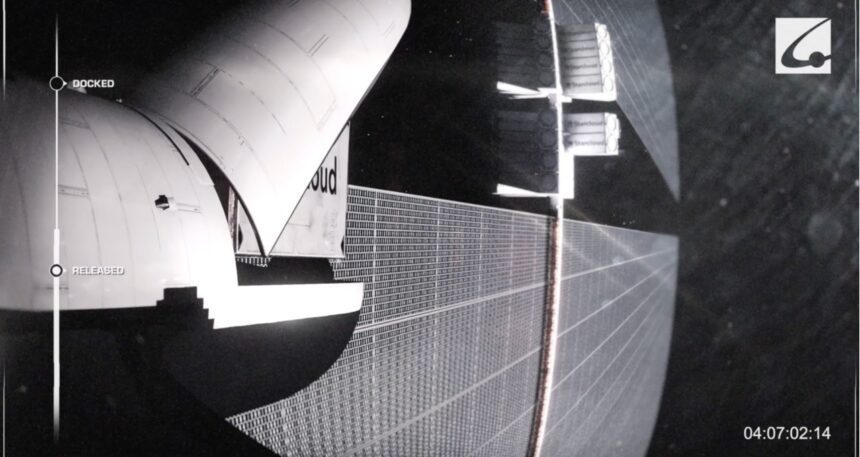
Starcloud also aims to revolutionize how energy is harnessed in space. By using colossal solar panels and advanced cooling systems, they plan to create a 5-gigawatt orbital data center. These panels, approximately 4 kilometers in width and length, are designed to capture energy from the sun, free from earthly limitations.
More Read

Starcloud’s Place in the Future
As we cast our gaze toward the future, Starcloud is not just aiming to improve data center efficiency; they aspire to change the paradigm of computing. The company’s cofounder, Philip Johnston, states, “In 10 years, nearly all new data centers will be built in outer space.” His vision underscores a future characterized by innovative technology, reduced environmental impact, and a commitment to sustainability that aligns with global demands.
Conclusion
The potential of space-based data centers heralds a new era in computing, pushing the boundaries of innovation while emphasizing sustainable practices. As Starcloud navigates this uncharted territory, the implications for both technology and the environment will undoubtedly affect generations to come. It represents a monumental step not merely towards efficiency but toward creating a more sustainable planet.
Inspired by: Source

![Optimizing Large Language Models for Personalized Machine Translation: Insights from Research [2505.16612]](https://aimodelkit.com/wp-content/uploads/2025/10/1760562929_arxiv-logo-fb-150x150.png "Optimizing Large Language Models For Personalized Machine Translation: Insights From Research [2505.16612]")


