


Understanding the Transformer’s Evolution in Machine Learning
Transformers have revolutionized the field of machine learning since their inception in 2019, driven by the groundbreaking BERT model. As technology evolves, so does the Transformers library, which has become a central hub for a diverse range of model architectures. This article delves into the transformative journey of Transformers, highlighting its significance, recent advancements, and implications for both model users and creators.
The Growth of Transformers
Initially focused on Natural Language Processing (NLP), the Transformers library has expanded its scope to encompass audio processing and computer vision. Today, it supports over 300 model architectures, with a steady addition of around three new models each week. This rapid development ensures that users have access to the latest state-of-the-art models, including popular architectures like Llama, Qwen, and GLM, right from day one.
A Comprehensive Model-Definition Library
Transformers have established themselves as a cornerstone in the machine learning ecosystem. They are integrated into various popular training frameworks, such as Axolotl, Unsloth, DeepSpeed, and PyTorch-Lightning. This integration allows for a seamless experience when transitioning between frameworks, enabling model developers to utilize the best features of each.
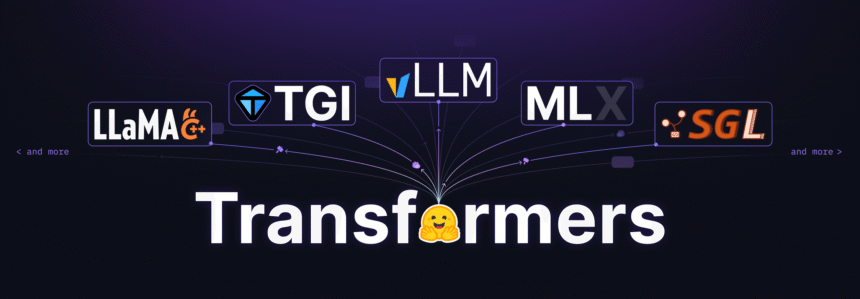
Moreover, collaboration with leading inference engines like vLLM, SGLang, and TGI has solidified Transformers’ position as a backend of choice. When a model is added to the Transformers library, it instantly becomes accessible in these inference engines, leveraging their unique strengths, such as inference optimizations and dynamic batching. For instance, utilizing the Transformers backend in vLLM is as simple as importing the model, enabling quick and efficient deployment.
Interoperability with Other Libraries
The Transformers library is committed to enhancing interoperability within the machine learning community. Recent collaborations with libraries like llama.cpp and MLX have made it easy to load and convert model files across platforms. This interoperability streamlines the workflow for users, allowing them to train models with Unsloth, deploy them using SGLang, and export them to llama.cpp for local execution—all without the hassle of complex conversions.
More Read

The adoption of the Transformers file format by the community has fostered an ecosystem where models can be easily shared and utilized across different libraries. This collaborative environment benefits all users by promoting a shared standard for model definitions.
Simplifying Model Contributions
One of the key focuses of the Transformers team is to reduce the barriers to model contributions. By simplifying the modeling code and providing clear APIs, the library aims to encourage more developers to contribute their models. This initiative includes:
- Streamlining the modeling code for clarity and ease of use, particularly for crucial components like KV cache and attention functions.
- Deprecating redundant components to promote efficient tokenization and the use of advanced vision processors.
- Reinforcing the modular design of model definitions to minimize code changes; long contributions and extensive file modifications are becoming a thing of the past.
These efforts are aimed at making it easier for both novice and seasoned developers to contribute to the library, fostering a vibrant community of model creators.
Implications for Model Users and Creators
For model users, the advancements in the Transformers library mean increased interoperability among various tools. This standardization ensures that different training, inference, and production tools work harmoniously together, enhancing the overall user experience.
On the other hand, model creators benefit significantly from the streamlined contribution process. A single contribution now allows a model to be accessible across all integrated libraries, drastically reducing the time and effort spent on releasing models. This community-driven approach to standardizing model implementations aims to minimize fragmentation in the ecosystem, making it easier for developers to innovate without getting bogged down by integration issues.
Engaging with the Community
The Transformers team is eager to hear feedback from the community regarding these developments and any additional changes that could enhance the ecosystem. Engaging directly with users through the Transformers community support tab on the Hub fosters a collaborative environment where ideas and suggestions can flourish.
By continually prioritizing user experience and community involvement, the Transformers library is poised to remain at the forefront of machine learning innovation. As the library evolves, it will undoubtedly continue to shape the future of model development and deployment across various domains.
Inspired by: Source


