


Donald Trump Re-Engages with the Bible: A Controversial Reading from the Oval Office
The Oval Office Reading and Its Context
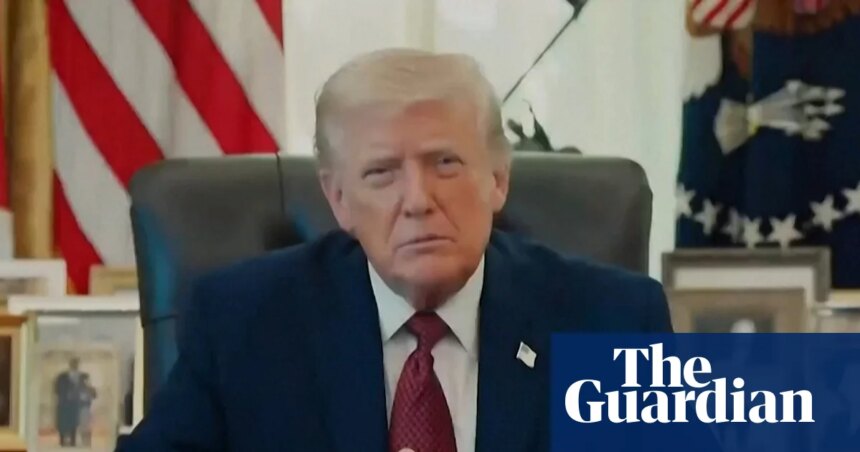
Recently, Donald Trump made headlines by reading a passage from the Bible in a televised message from the Oval Office. This event was part of a week-long right-wing initiative called “America Reads the Bible,” which includes 500 participants who have taken turns reading the Bible in its entirety. Seated behind the iconic Resolute Desk, Trump recited a passage from 2 Chronicles—an excerpt that has gained traction among conservative circles, which reads:
“If my people, which are called by my name, shall humble themselves, and pray, and seek my face, and turn from their wicked ways; then will I hear from heaven, and will forgive their sin, and will heal their land.”
A Mixed Reception Among Viewers
Trump’s reading was not broadcast to the country as a whole; instead, it was shared through a slightly uneven livestream viewed by a select audience. For many, this seemed a calculated move on Trump’s part to win back support from evangelical and conservative Christian voters. After alienating some of these voters with his controversial “Son of God” AI imagery and his critical remarks about Pope Leo, his decision to participate in such an event raised eyebrows.
More Read

Given Trump’s historically tenuous relationship with Christianity, skepticism about the sincerity of his efforts is common. Over the years, Trump has made various comments about the Bible that have drawn scrutiny, including his inability to cite a single Bible verse during his 2016 campaign and his odd reference to communion as “my little wine” and “my little cracker.”
The Complicated History with Faith
Throughout his political career, Trump has often professed to hold the Bible in high regard, declaring it his favorite book. However, this proclamation often clashes with his actions. Notably, during his inauguration in 2024, Trump opted not to place his hand on the Bible, an act that drew criticism from various religious groups. Moreover, his claim to have never asked God for forgiveness stands in stark contrast to core Christian beliefs.
Organizing America Reads the Bible
The event itself was organized by Bunni Pounds, founder and vice-president of Christians Engaged, a group focused on mobilizing Christian voters. The organization’s website has raised eyebrows for its stance on LGBTQ+ issues, referring to homosexuality and gay marriage as “abominations.” This context highlights that the participants in “America Reads the Bible” include not just ordinary citizens but also figures who actively wield their faith as a political weapon.
In attendance were individuals like Mike Johnson, the U.S. House Speaker, and Pete Hegseth, known for his hardline defense strategies. Additionally, participants hailed from organizations that have demonstrated opposition to LGBTQ+ rights, casting a long shadow over the event’s perceived intentions.
Reactions from Religious Scholars
Responses from religious scholars and leaders have been overwhelmingly critical. Jemar Tisby, a historian focusing on racial justice and faith, commented on the contradictory nature of quoting scripture while endorsing violence and exclusionary practices. Similarly, Pastor Doug Pagitt of the progressive group Vote Common Good noted, “If you like reading the Bible, try living it,” calling on participants to embody the values they profess to uphold.
This sentiment underscores a growing divide not just within the political landscape but also within faith communities regarding the appropriate use of religious texts in political discourse.
The Bigger Picture: Impact and Implications
While Trump may see reading the Bible as a strategic move toward reconciliation with disaffected voter segments, the broader implications regarding faith and political engagement remain complex. Many observers are uncertain about how significantly this act will influence public opinion, particularly with an event organized by a figure like Bunni Pounds, whose mission is deeply entwined with a brand of nationalism that some find exclusionary.
In conclusion, Trump’s attempt to align himself with Christian values through a symbolic reading of the Bible has sparked a conversation about sincerity, faith, and the intersection of politics and religion. As the landscape evolves, the reactions from both supporters and critics will continue to shape the discourse around faith in the public sphere.
Inspired by: Source


