


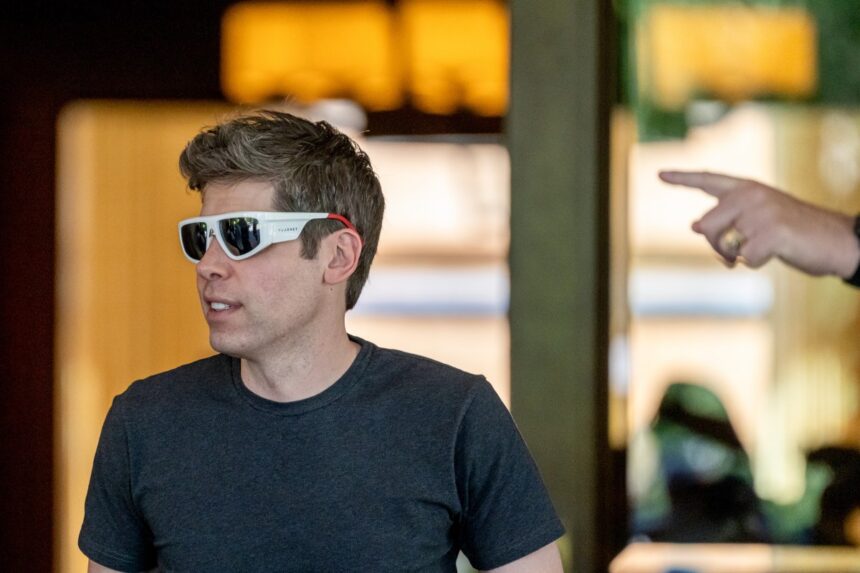
Alcatraz Island and OpenAI: A Glimpse Into the Future of AI at a San Francisco Dinner
As I sit in a Mediterranean restaurant overlooking the iconic Alcatraz Island, the atmosphere buzzes with excitement and anticipation. This evening’s host is none other than Sam Altman, the CEO of OpenAI. My attention drifts momentarily to the extravagant menu featuring a hundred-dollar fish entrée. Around me, a dozen tech reporters engage in light chatter, unaware of the exciting revelations about to unfold.
Altman’s Bold Aesthetic Choice
Among the attendees, Altman arrives with a much-discussed accessory—or lack thereof—a bare iPhone devoid of a protective case. My immediate reaction slips out: “No phone case is a bold choice.” I quickly realize that this billionaire, who employs Apple’s design legend Jony Ive, likely prioritizes preserving the iPhone’s sleek design over the worry of a potential $1,000 replacement.
At the dinner, Altman humorously comments on a forthcoming AI device developed in collaboration with Ive, stating, “If you put a case over it, I will personally hunt you down,” emphasizing the aesthetic vision they have for the project.
GPT-5 and Future Ambitions
The ambience allows for both laughter and serious discussion, with Altman and his executives hinting at future endeavors that go beyond the immediate launch of GPT-5. Despite its recent introduction, GPT-5 has encountered mixed reviews, leaving many to wonder if it truly meets the overwhelming hype associated with its predecessors. Unlike GPT-4, which set a new standard in AI capability, GPT-5 reportedly performs at a comparable level with models from competitors like Google and Anthropic.
This curious dinner is not just a reflection on
the past but also a peek into OpenAI’s evolving focus. Altman suggests that the significance of individual AI model launches may be diminishing. OpenAI aims to challenge legacy players, creating a multifaceted future involving search, consumer hardware, and enterprise software.
More Read

New Leadership and Expansion Plans
In a groundbreaking announcement, Altman introduced Fidji Simo, the incoming CEO of applications, who will spearhead new consumer apps beyond ChatGPT. Simo’s expertise could pave the way for the development of an AI-powered browser designed to rival Chrome. Altman’s bold suggestion about potentially acquiring Chrome, should it be available, marks a significant ambition for OpenAI.
Adding to these plans, Altman expressed his interest in creating an AI-powered social media platform. He lamented the current state of AI in social media, declaring, “there’s nothing inspiring” about it today. His vision involves creating a more interactive and enjoyable social experience through AI.
Competing in the Brain-Computer Interface Space
Furthermore, Altman revealed OpenAI’s intention to invest in Merge Labs, a brain-computer interface startup aiming to compete with Elon Musk’s Neuralink. While discussions around this investment remain abstract, Altman’s willingness to engage with innovative technologies signals OpenAI’s pivotal role in integrating AI with various high-tech fields.
Learning from Challenges: GPT-5’s Rollout
As the dinner unfolds, Altman and his VP of ChatGPT, Nick Turley, reflect on the lessons learned from the rollout of GPT-5. Turley admitted they felt things went awry without a clear communication strategy regarding the deprecation of GPT-4o. Moving forward, OpenAI plans to implement more transparent “transition periods” for users when rolling out new models.
Acknowledging user sentiment, Turley mentioned that they are updating GPT-5 to ensure responses are “warmer” without pandering, addressing feedback that many users found the model too blunt. This nuanced approach underscores their commitment to user experience.
Addressing Mental Health Concerns
A significant aspect of their update strategy involves collaboration with mental health professionals. OpenAI has crafted a rubric to assess GPT-5’s responses, focusing on promoting healthy interactions while mitigating risks associated with dependency on AI interactions. Both Altman and Turley maintain an awareness of the potentially tens of millions of users developing unhealthy relationships with AI, taking steps to safeguard these vulnerable interactions.
Business Growth and Future Directions
Despite the mixed feelings surrounding GPT-5’s performance, OpenAI’s business appears to be thriving. Altman reported that API traffic doubled within 48 hours of the launch, leaving them virtually “out of GPUs” due to overwhelming demand. This significant rise indicates that, while models may vary in capability, the appetite for AI technology remains robust.
As OpenAI continues to expand its endeavors into areas like browsers, brain-computer interfaces, data centers, and robotics, Altman’s aspirations seem to reach far beyond just being the ‘ChatGPT maker.’ The company is poised to redefine itself, potentially evolving into a broad-tech giant reminiscent of Alphabet, but perhaps even broader in scope.
Media Relations and Public Vision
In preparation for what Altman hints could be an eventual public offering, OpenAI seems eager to cultivate positive relationships with the media while distancing itself from being merely defined by its flagship AI model. The dinner may have raised more questions than it answered, but one thing is clear: OpenAI is planning an expansive future, ready to tackle the challenges and opportunities that lie ahead in the AI landscape.
Inspired by: Source


