


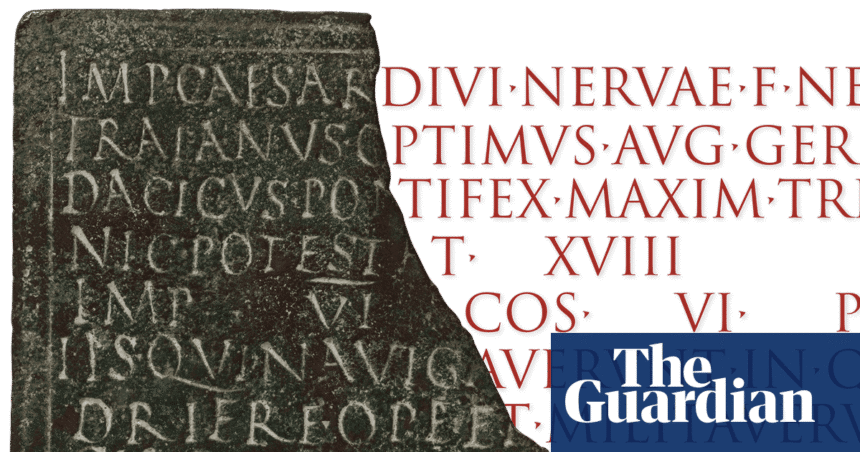
Aeneas: The AI Tool Revolutionizing the Study of Ancient Roman Inscriptions
In the annals of history, few civilizations have left a mark as profound as the Romans. They bequeathed us not only monumental architecture and legal frameworks but also a rich tapestry of inscriptions that offer insight into their social, political, and cultural lives. From declarations and edicts to love poems and epitaphs, these texts provide a unique window into the ancient world. However, the challenge of deciphering and contextualizing these inscriptions has been an ongoing struggle for historians and scholars. Enter Aeneas, a groundbreaking artificial intelligence tool developed by Google DeepMind, designed to streamline this arduous process.
The Role of Inscriptions in Roman History
Inscriptions are an invaluable source of information, reflecting the voices of people from various social strata—not just those in power. According to Dr. Thea Sommerschield, a historian at the University of Nottingham and one of the developers of Aeneas, these texts are significant as they depict history written by the ancients themselves. Scholars estimate that approximately 1,500 new inscriptions are discovered each year, each contributing to our understanding of Roman life.
However, the challenges of working with these ancient texts are considerable. Many inscriptions are fragmented or worn beyond legibility due to time and environmental conditions. Additionally, the historical context of numerous inscribed artifacts is often obscured, further complicating the interpretation process.
Aeneas: Bridging the Gap in Historical Research
To address these challenges, Aeneas was developed to assist scholars in deciphering these ancient relics. The AI tool is named after the mythical Trojan hero Aeneas and focuses on predicting where and when inscriptions were created while also suggesting possible words to fill in the gaps caused by wear. Essentially, Aeneas acts as a digital companion for historians, offering suggestions and presenting connections that may not be immediately evident.
Dr. Sommerschield notes that "Aeneas helps historians interpret, attribute, and restore fragmentary Latin texts," which encapsulates the tool’s primary mission. By analyzing nearly 200,000 inscriptions, which comprise about 16 million characters, the program can offer a treasure trove of information to its users.
More Read

Methodology: How Aeneas Works
The uniqueness of Aeneas lies in its approach to understanding the inscriptions. Instead of merely searching for similar words, the AI identifies deeper historical connections and enhances the contextualization of the texts. It processes both text and images from the inscriptions being studied, leading to insights that facilitate more thorough analyses.
One of the most impressive features of Aeneas is its ability to classify inscriptions into one of 62 Roman provinces and provide estimated dates for their creation with an accuracy of within 13 years. This is done through an extensive training process that familiarizes the AI with a wide array of historical nuances.
Transformative Success Stories
Initial trials demonstrate the remarkable capabilities of Aeneas. In one instance, researchers tasked it with analyzing the Res Gestae Divi Augusti, a monumental inscription detailing the achievements of Emperor Augustus. The program suggested two potential dates for its composition, aligning perfectly with ongoing scholarly debates.
Anecdotes from historians highlight several significant breakthroughs facilitated by Aeneas, such as drawing subtle linguistic connections between inscriptions from different eras and locations, thereby enhancing our understanding of the evolution of language and culture in ancient Rome.
Collaborative Efforts and Community Impact
Aeneas has been used collaboratively by 23 historians who have reported that the contextual support it offers proved beneficial in approximately 90% of their analyses. Renowned classicist Mary Beard describes Aeneas as "promising to be transformative," emphasizing its potential to augment the tools available for studying ancient texts.
This AI tool not only aids seasoned historians but also opens doors for a broader array of researchers and enthusiasts. Jonathan Prag, a co-author and professor at the University of Oxford, notes that Aeneas democratizes access to the rich corpus of inscriptions, allowing more people to engage meaningfully with these ancient artifacts.
The Future of Historical Research
As Aeneas continues to evolve, it holds the promise of transforming our approach to the ancient world. Critics caution, however, that while AI provides invaluable insights, it should be used judiciously. Developing a critical understanding of the tool’s functionalities is essential to ensure that the interpretations generated by Aeneas enhance rather than overshadow traditional methods of historical inquiry.
In an era where technology and human scholarship need not be at odds, Aeneas stands as a testament to what can be achieved when innovation meets the timeless quest for knowledge. The intersection of history and artificial intelligence heralds an exciting future for the study of ancient Rome and beyond.
Inspired by: Source


