


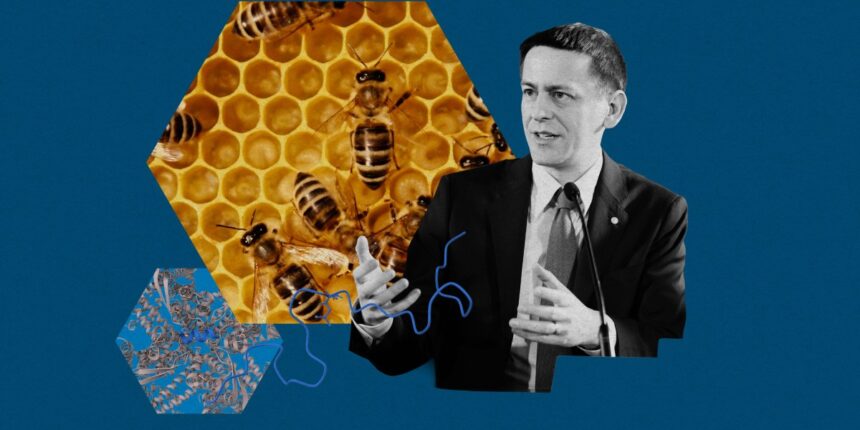
The Future of Protein Structure Prediction: Insights from AlphaFold and LLMs
In the rapidly advancing field of biochemistry, researchers are constantly seeking innovative ways to predict and understand protein structures. Historically, determining a protein’s shape in the lab could have cost upwards of $100,000. As emphasized by scientist Jumper, “If we were only a hundred thousand dollars away from doing a thing, it would already be done.” This sentiment underscores the challenge and urgency in protein research, where time and expense have often obstructed discovery.
The Power of Structure Prediction
Jumper is particularly excited about the potential of modern technology to overcome these barriers. He states, “We’re trying to figure out how to make structure prediction an even bigger part of the problem, because we have a nice big hammer to hit it with.” This “big hammer” represents the groundbreaking advancements made by AlphaFold, which has revolutionized how scientists can predict protein structures with unprecedented accuracy and speed.
Using this technology, researchers aim to streamline their processes. Jumper asks a compelling question that encapsulates this vision: “Let’s make things into nails.” The goal is to leverage the enhanced speed of predictions to incorporate structure prediction more extensively into scientific workflows.
Envisioning What’s Next
So, what comes next in this exciting journey? Jumper’s ambitious vision involves merging the deep, specialized capabilities of AlphaFold with the expansive capabilities of Large Language Models (LLMs). “We have machines that can read science. They can do some scientific reasoning,” he notes, alluding to the potential synergy between these technologies.
The intersection of AlphaFold and LLMs could pave the way for systems that not only predict structures but also comprehend and generate hypotheses. Jumper is keenly aware of the profound implications this integration could have on the field, suggesting that merging these technologies might create “amazing, superhuman systems for protein structure prediction.”
More Read

The Role of AlphaEvolve
An associated project named AlphaEvolve, developed by another team at Google DeepMind, illustrates how this integration could manifest. AlphaEvolve utilizes an LLM to propose possible solutions to scientific challenges, while a secondary model assesses these solutions for viability, filtering out less promising ideas. This approach has already led to significant discoveries in mathematics and computer science, showcasing the potential for LLMs to enhance scientific inquiry.
When asked if this aligns with his vision, Jumper responded cryptically, “I won’t say too much on methods, but I’ll be shocked if we don’t see more and more LLM impact on science.” Such statements fuel curiosity and speculation within the scientific community about the future of research methodologies.
Navigating Future Challenges
At 39, Jumper became one of the youngest recipients of the Nobel Prize in Chemistry. Now, he faces the daunting question of what lies ahead in his already illustrious career. “It worries me,” he admits, recognizing the pressure that accompanies such high expectations.
As he reflects on his journey, he describes his current mindset: "I’m at the midpoint of my career, roughly." Rather than focusing solely on monumental achievements, Jumper advocates for exploring smaller ideas and concepts—those incremental advancements that can lead to greater breakthroughs. “The next thing I announce doesn’t have to be, you know, my second shot at a Nobel. I think that’s the trap,” he implies, emphasizing a balanced approach to scientific discovery.
The Intersection of Innovation
Overall, Jumper’s insights illuminate both the tremendous potential of modern computational tools in biology and the philosophical considerations that come with groundbreaking discovery. By contemplating how to effectively merge technologies like AlphaFold and LLMs, he aims to solve complex scientific questions while fostering a culture of curiosity and exploration within the research community.
Jumper’s perspective encourages scientists to embrace the unknown, reminding them that every small discovery can lead to a larger understanding of the intricate world of proteins and beyond. As researchers embark on this journey, they pave the way for innovations that could redefine our approach to science, leading to more efficient and insightful methods for tackling challenges in biochemistry and related fields.
Inspired by: Source


