


Harper Database Platform: A New Era of Single-Runtime Architecture
In the rapidly evolving landscape of database architecture, the Harper database platform has made a compelling case for its single-runtime architecture philosophy. By keeping application code and data tightly integrated, Harper aims to optimize performance and streamline workflows, especially for live, personalized data workloads. Recently unveiling version 5.2, the platform now boasts improved throughput capabilities and an innovative record cache, fundamentally shifting the way developers approach data architecture.
Performance Benchmark: Harper vs. Vercel
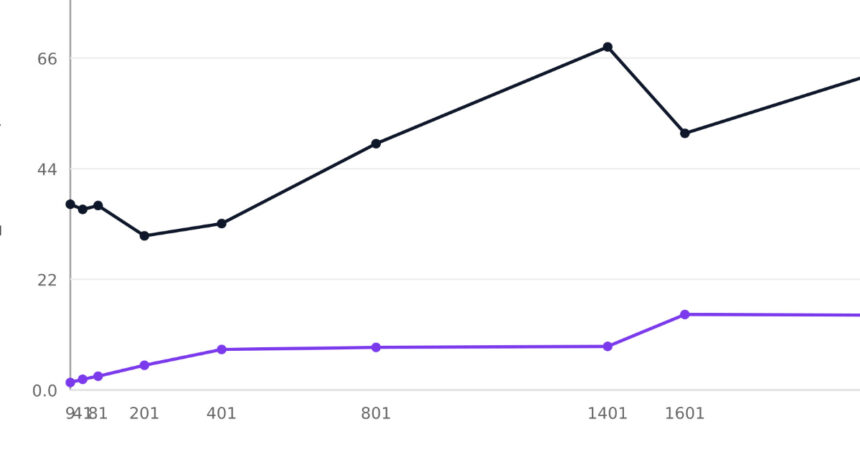
One of the standout highlights of Harper’s approach is its impressive benchmark results against a Vercel-based stack. Vercel, known for its serverless architecture, often excels in caching and edge delivery. However, Harper’s architecture demonstrates a significant advantage in scenarios requiring rapid data access, recording an in-memory data path of approximately 0.4ms compared to ~3ms for Vercel’s separate data tier. This disparity becomes increasingly pronounced when handling extensive personalized data requests, reinforcing Harper’s commitment to high-speed performance.
Emphasizing Operational Simplicity
Harper’s philosophy counters a growing trend in the industry, exemplified by Databricks’ recent introduction of Lakebase—a PostgreSQL database that separates compute from storage. While Lakebase advocates for decoupling layers, Harper’s strategy is all about collapsing them. This integrated approach offers not only operational simplicity but also substantial cost advantages. By co-locating the data, compute, and messaging systems within a single runtime, developers can minimize network hops and improve overall efficiency.
The Benchmark Test: A Side-by-Side Comparison
In a comprehensive test, developers constructed an identical application twice: once using Harper’s platform and once employing a combination of Vercel Functions, Neon Postgres, Upstash Redis, and Ably for real-time functionalities. Both setups utilized the same UI, code contract, and data, allowing for a fair comparison that isolated architectural differences.
The benchmark consisted of 474 load tests across multiple scenarios and regions in the U.S. Results indicated that while Vercel’s serverless autoscaling performed better under high concurrency loads, Harper outperformed in handling live data interactions. This dichotomy highlights the role of workload types in determining the most appropriate architecture.
More Read

Understanding the Trade-offs
It’s crucial to comprehend the factors influencing the results. The benchmark utilized a warm in-memory dataset, a setup that may not reflect performance variability when the working set exceeds available memory. Harper’s architecture shines when dealing with live, personalized data paths—such as single reads, server-side streaming, and read fan-out under typical loads. In contrast, Vercel demonstrates its strengths in cacheable content delivery, leveraging its advanced CDN capabilities.
Insights from Aleks Haugom at Harper
In an informative piece titled “5 Architectures for Web Personalization,” Aleks Haugom, Senior Manager of GTM at Harper, delves deeper into the nuances of personalized architecture. He emphasizes a personalized read as a function call against an in-memory table, which avoids the latency incurred from network requests that plague traditional architectures. With data cached in-process, every user interaction is optimized for speed via regional replication, ensuring minimal delay.
The Advancements in Harper Version 5.2
The launch of Harper version 5.2 has introduced a groundbreaking record cache aimed at enhancing read speeds by five to eight times. Additionally, the platform now offers each database its own commit path, allowing for significant advancements in managing heavy writes without disrupting unrelated tasks. This improvement is particularly noteworthy, as it has reduced the p99 latency of filesystem calls from 223.7ms to a remarkable 2.6ms, showcasing Harper’s continuous commitment to performance optimization.
Future Outlook: Harper’s Potential
While the current benchmarks do not reflect the latest features introduced in version 5.2, the architecture’s foundation suggests an upward trajectory for industry performance standards. As developers increasingly demand real-time data interactions and speedy performance, platforms like Harper are well-positioned to lead the charge in integrating advanced data architectures that prioritize speed and efficiency.
With its innovative approach and ongoing enhancements, Harper continues to challenge conventional wisdom in the database landscape, pushing boundaries and setting new standards for what is achievable in database performance and efficiency.
Inspired by: Source


