


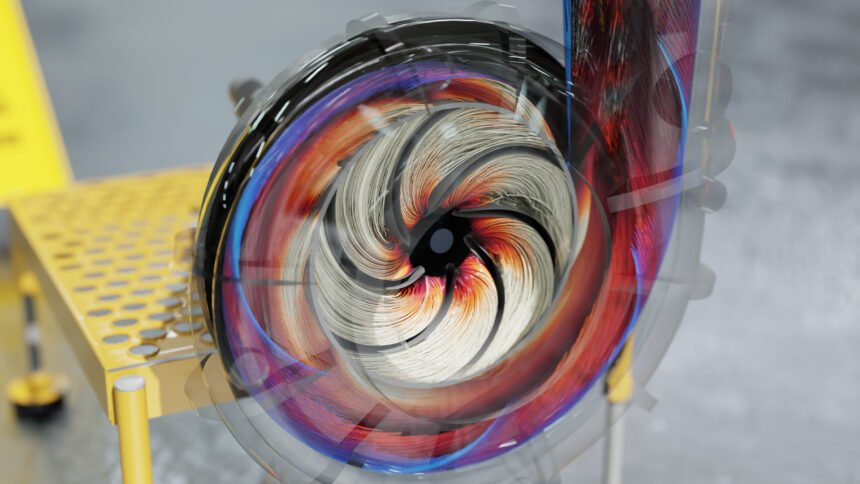
Accelerating Engineering Design: The Power of NVIDIA DoMINO NIM Microservice
Leading technology companies within the aerospace and automotive sectors are embracing transformative innovations to optimize their engineering design processes. At the forefront of this revolution is the NVIDIA DoMINO NIM microservice, a key component of the NVIDIA PhysicsNeMo AI physics framework. This state-of-the-art technology allows organizations to leverage GPU-accelerated computing and interactive digital twin technologies, resulting in astonishing advancements in modeling and simulation workflows.
Speeding Up Innovation with NVIDIA PhysicsNeMo
The NVIDIA PhysicsNeMo framework is reshaping the way companies approach the simulation of physical systems. With the capability to conduct simulations for automobiles, aircraft, and heavy machinery in near real time, companies can dramatically enhance their time to market. Reports indicate that businesses using this framework can accelerate their processes by an incredible 500x compared to traditional simulation methods. This level of efficiency not only fosters innovative designs but also shortens development cycles, allowing for faster delivery of cutting-edge products.
A 500x Leap in Computational Engineering: Synopsys’ Success
Simulation software providers like Ansys, a part of Synopsys, have reported groundbreaking results by utilizing NVIDIA PhysicsNeMo. They achieve extraordinary speedups in computational engineering, leveraging the high accuracy of AI physics combined with the power of GPU acceleration.
The framework facilitates an innovative approach to starting fluid simulations, pinpointing a highly accurate initial state that previously demanded numerous computational iterations. By employing NVIDIA GPU-accelerated tools like Ansys Fluent, fluid simulations can be executed up to 50x faster than conventional methods. Furthermore, when NVIDIA PhysicsNeMo’s pre-trained models are integrated, this speed can be multiplied by an extra 10x, showcasing the tremendous potential for accuracy and efficiency in simulation tasks.
Transforming Aerospace Design
Companies in aerospace technology are harnessing NVIDIA GPU-accelerated workflows and PhysicsNeMo to streamline the design and optimization of advanced systems. For instance, Northrop Grumman and Luminary Cloud utilize AI-driven physics to expedite the design of spacecraft thruster nozzles. Luminary’s CUDA-X-accelerated computational fluid dynamics (CFD) solver enables Northrop to generate extensive training datasets. This powerful infrastructure allows engineers to explore a vast array of design options swiftly, culminating in the identification of optimal solutions.
More Read

Another aerospace leader, Blue Origin, is channeling NVIDIA PhysicsNeMo and advanced AI modeling for the design of next-gen space vehicles. This framework permits Blue Origin to maximize existing and augmented datasets, facilitating rapid exploration and validation of potential design candidates through high-fidelity solvers.
Pioneering Computational Engineering with GPU Acceleration
NVIDIA continues to make strides in computational engineering by advancing the simulation process through GPU acceleration. Cadence, for example, utilizes its Cadence Fidelity computational fluid dynamics platform in conjunction with NVIDIA’s CUDA-X libraries to push the envelope of real-time simulation in aerospace.
By leveraging GPU acceleration, Cadence enables leading manufacturers in the aerospace sector to construct expansive AI training datasets utilizing the Millennium M2000 supercomputer. This capacity allows engineers to interactively examine and fine-tune their designs, significantly enhancing system efficiency and accelerating time to market.
A global leader in energy solutions exemplifies how NVIDIA technology can optimize turbine performance. By using the Cadence Fidelity LES Solver and NVIDIA’s Grace Blackwell-accelerated simulation platforms, this enterprise can quickly iterate designs and conduct intricate multiphysics simulations. The efficiency gained through these simulations translates to improved emissions management and greater reliability in next-generation energy systems.
For real-time insights and to keep updated with these groundbreaking advancements in AI and simulations, watch the GTC Washington, D.C., keynote from NVIDIA’s founder and CEO, Jensen Huang, along with additional informative sessions.
Through these innovations, NVIDIA is not just shaping the future of engineering design; it’s fundamentally altering the very landscape of technological development in industries globally.
Inspired by: Source


