


Advancing AI Efficiency: Exploring Alibaba’s Qwen3-Next Models
As artificial intelligence (AI) continues to evolve, the importance of efficient, scalable solutions grows. With larger AI models capable of processing extended sequences of text, achieving a balance between scale and operational efficiency is paramount. Enter Alibaba’s groundbreaking release of two new open models, Qwen3-Next 80B-A3B-Thinking and Qwen3-Next 80B-A3B-Instruct. These models offer a glimpse into the future of hybrid Mixture of Experts (MoE) architectures and their potential to transform AI application development.
- The Launch of Qwen3-Next Models
- Architectural Innovations for Enhanced Performance
- GPU Communication and High-Speed Connectivity
- Sophisticated Attention Mechanisms
- Enhancing Long Context Processing Capabilities
- Optimized Inference Across NVIDIA Platforms
- Deployment Options for Developers
- Production-Ready Deployment with NVIDIA NIM
- Harnessing the Power of Open Source AI
- Get Started Today
The Launch of Qwen3-Next Models
The Qwen3-Next 80B-A3B-Thinking model is now available on build.nvidia.com, empowering developers to test its advanced reasoning capabilities through the user interface or the NVIDIA NIM API. This model illustrates how modern AI frameworks can leverage intricate architecture to enhance cognitive functions and output efficiency.

Architectural Innovations for Enhanced Performance
Each Qwen3-Next model comprises 80 billion parameters, yet thanks to its sparse MoE structure, only 3 billion are activated per token. This architecture allows a vast model’s power while maintaining the efficiency typically associated with smaller models. The MoE module operates with 512 routed experts and a shared expert, activating ten experts per token as needed. This routing system significantly enhances performance, particularly in scenarios demanding rapid inter-GPU communication.
GPU Communication and High-Speed Connectivity
The performance of a Mixture of Experts model like Qwen3-Next relies heavily on effective inter-GPU communication. NVIDIA’s 5th-generation NVLink, boasting a staggering 1.8 TB/s of direct GPU-to-GPU bandwidth, minimizes latency during the expert routing process. This capability directly impacts faster inference times and increased token throughput, making it vital for modern AI workflows.
More Read

Sophisticated Attention Mechanisms
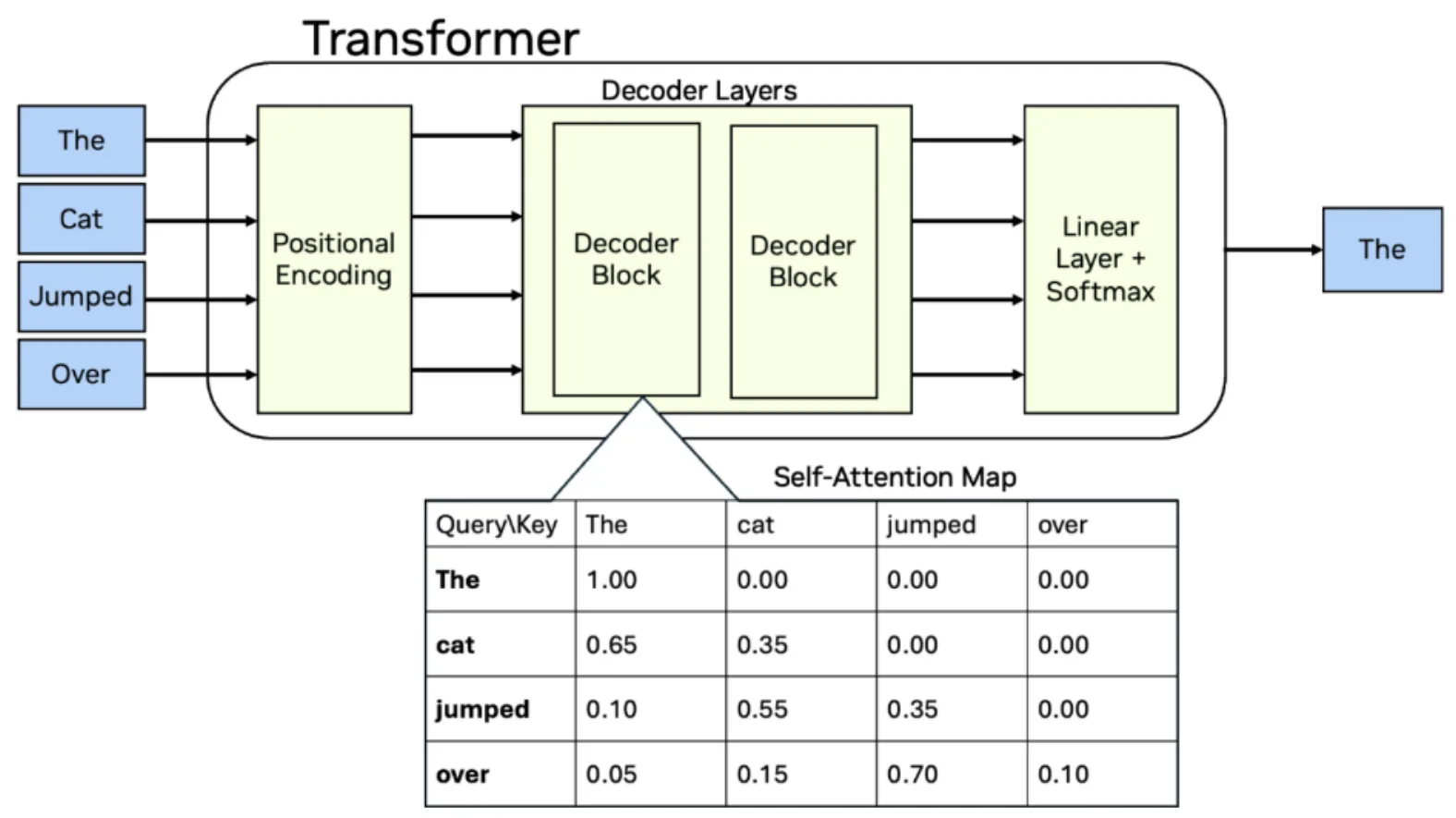
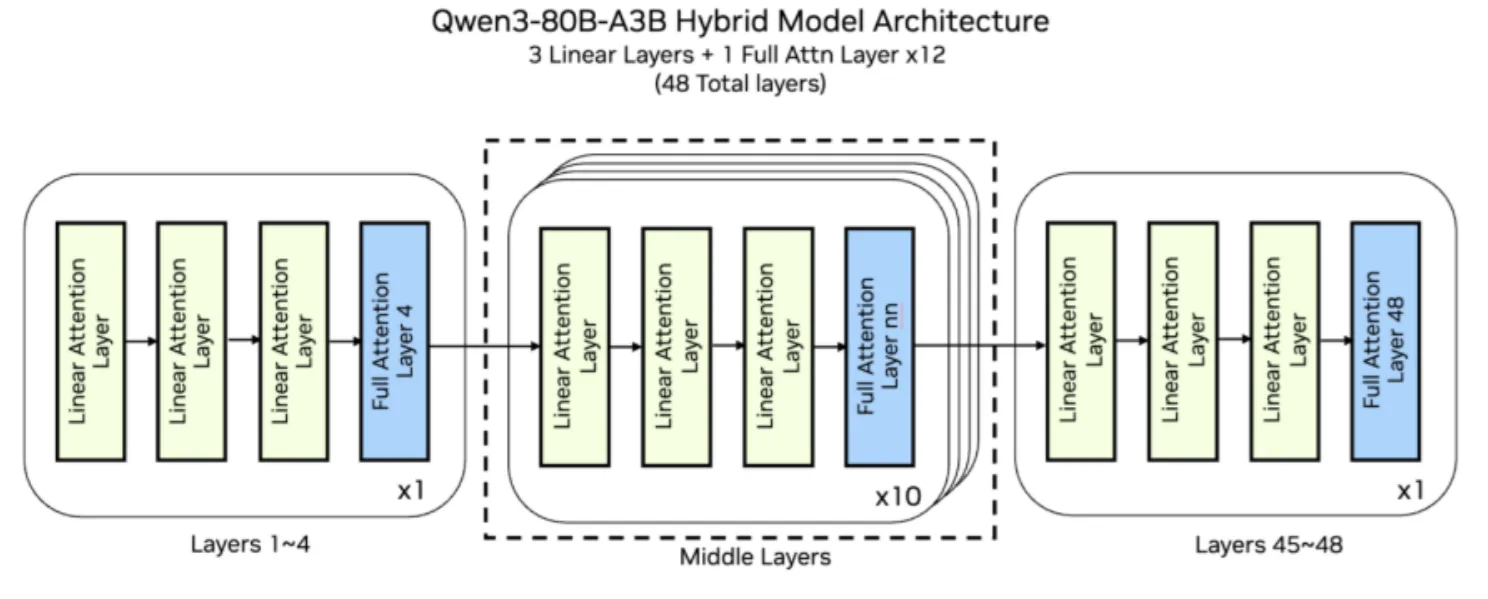
Incorporating 48 layers within the model, every fourth layer utilizes GQA (Global Query Attention), while the remaining layers implement the newest linear attention structures. By assessing and determining the significance of each token, these attention layers enhance the processing of lengthy input sequences. However, conventional software stacks often lack pre-optimized primitives necessary for exploiting these innovative architectures effectively.
Enhancing Long Context Processing Capabilities
To manage long input context length effectively, the Qwen3-Next model incorporates Gated Delta Networks, a technology developed through a collaboration between NVIDIA and MIT. This innovation improves the model’s focus on processing lengthy sequences, allowing for efficient management of super-long texts without losing critical information. Memory and computation scaling achieve remarkable enhancements, almost linearly correlating with the sequence length.
Optimized Inference Across NVIDIA Platforms
The Qwen3-Next models can operate seamlessly on NVIDIA’s Hopper and Blackwell architectures, optimizing inference performance. With NVIDIA’s CUDA programming framework, developers can experiment with new methods, enabling traditional attention layers to coexist with the linear attention layers found in Qwen3-Next. This hybrid approach not only enhances efficiency but also increases token generation capabilities, ultimately fostering revenue growth for AI factories.
Deployment Options for Developers
NVIDIA’s collaboration with open-source frameworks SGLang and vLLM adds to the flexibility of deploying these models for the community. SGLang users can execute a simple command to launch the model:
bash
python3 -m sglang.launch_server –model Qwen/Qwen3-Next-80B-A3B-Instruct –tp 4
Similarly, users looking to deploy with vLLM can follow these steps:
bash
uv pip install vllm –extra-index-url https://wheels.vllm.ai/nightly –torch-backend=auto
vllm serve Qwen/Qwen3-Next-80B-A3B-Instruct -tp 4
Production-Ready Deployment with NVIDIA NIM
Developers aiming for a more robust and enterprise-ready deployment can rely on NVIDIA NIM, which hosts Qwen3-Next models for free. Prepackaged, optimized microservices for these models will also be available for download soon, enabling organizations to integrate them seamlessly into their existing infrastructure.
Harnessing the Power of Open Source AI
The introduction of the hybrid MoE architecture within the Qwen3-Next models represents a significant step for the AI community. By making these models openly accessible, Alibaba empowers researchers and developers to experiment, innovate, and collaborate. NVIDIA shares this ethos through its contributions to open-source solutions, such as NeMo for AI lifecycle management, Nemotron LLMs, and Cosmos world foundation models. Together, these initiatives are paving the way for a more accessible, transparent, and collaborative AI future.
Get Started Today
Interested developers can explore the Qwen3-Next models directly on Open Router or download them from Hugging Face to begin their journey into cutting-edge AI technology. Dive in, and unlock new capabilities today!
Inspired by: Source


