


Nvidia Expands Omniverse Blueprint for AI Factory Digital Twins: A Game Changer for Industrial AI
Nvidia has unveiled an exciting expansion to its Omniverse Blueprint for AI factory digital twins during Computex 2025 in Taiwan. This preview brings significant partnerships and cutting-edge integrations, marking a pivotal moment in AI factory development. The updated blueprint now features collaborations with industry giants like Delta Electronics, Jacobs, and Siemens, joining existing alliances with Cadence, Schneider Electric with ETAP, and Vertiv.
Unifying the AI Factory Ecosystem
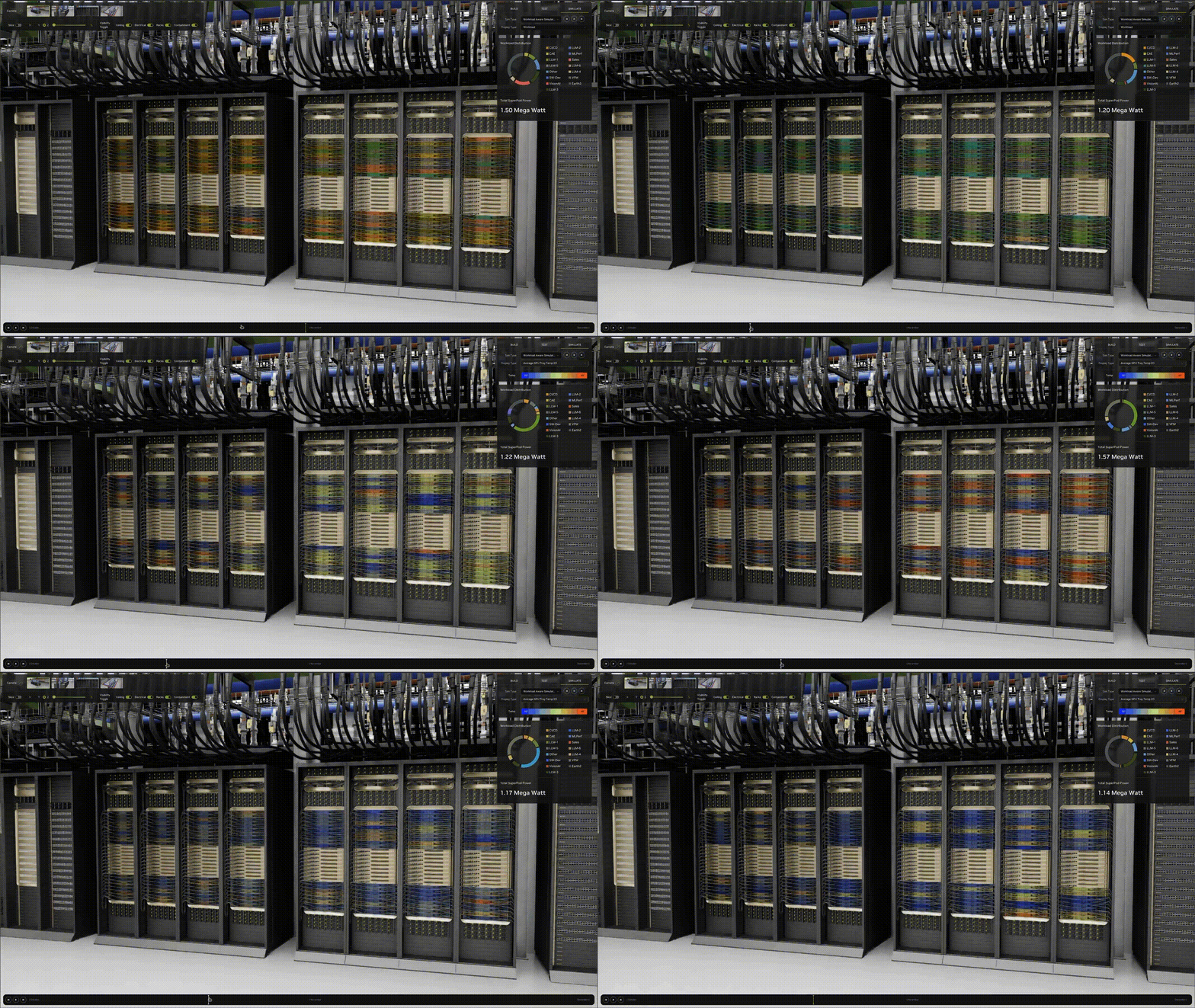
The newly expanded Omniverse Blueprint is set to revolutionize how the design, simulation, and deployment of AI factories are approached. By unifying power, cooling, and networking components, this ecosystem empowers engineering teams to construct accurate digital twins of AI facilities. These virtual environments facilitate early issue detection, optimization, and overall smarter facility management — all critical in times of rapid technological advancement.
Comprehensive Modeling with OpenUSD
A cornerstone of the blueprint is its foundation on Universal Scene Description (OpenUSD) asset libraries. This sophisticated approach enables developers to aggregate and represent detailed 3D and simulation data in a single, unified model. By visualizing all aspects of AI infrastructure, teams can design and simulate advanced systems that are not only efficient but also resilient and capable of handling the demanding workloads associated with AI technologies.
Diverse Partners Optimizing AI Factory Designs
The Omniverse Blueprint fosters collaboration between diverse partners, enhancing the design and simulation processes significantly. Siemens is actively engaging with the blueprint by creating 3D models and contributing to the SimReady initiative, which standardizes simulation-ready assets. Delta Electronics is adding detailed models of its equipment, while Jacobs focuses on testing and optimizing workflows for the entire blueprint ecosystem.
More Read

Notably, industry leaders such as Schneider Electric with ETAP and Vertiv are also contributing SimReady assets to help populate the digital twin with realistic 3D representations of power, cooling, and mechanical systems.
Key Industry Insights
Tanuj Khandelwal, CEO of ETAP, underscores the importance of this partnership, stating, “As AI factories continue to scale at an unprecedented pace, the energy demands they generate are reshaping the entire digital infrastructure landscape.” The integration of Omniverse Blueprint with industry-leading capabilities allows customers to optimize energy efficiency even before construction begins.
Similarly, Ben Gu, from Cadence, emphasizes how digital twins fundamentally transform how AI factories are designed and operated, leading to more efficient and effective processes.
Building SimReady Assets for Enhanced Simulations
A significant advancement in this initiative is the SimReady standardization workflow. Originally crafted to streamline Nvidia’s internal processes, this industry-agnostic resource now promotes standardized requirements for developing SimReady capabilities. Data center owners and developers can utilize this framework to construct, optimize, and test robust digital twins focused on electrical and thermal management.
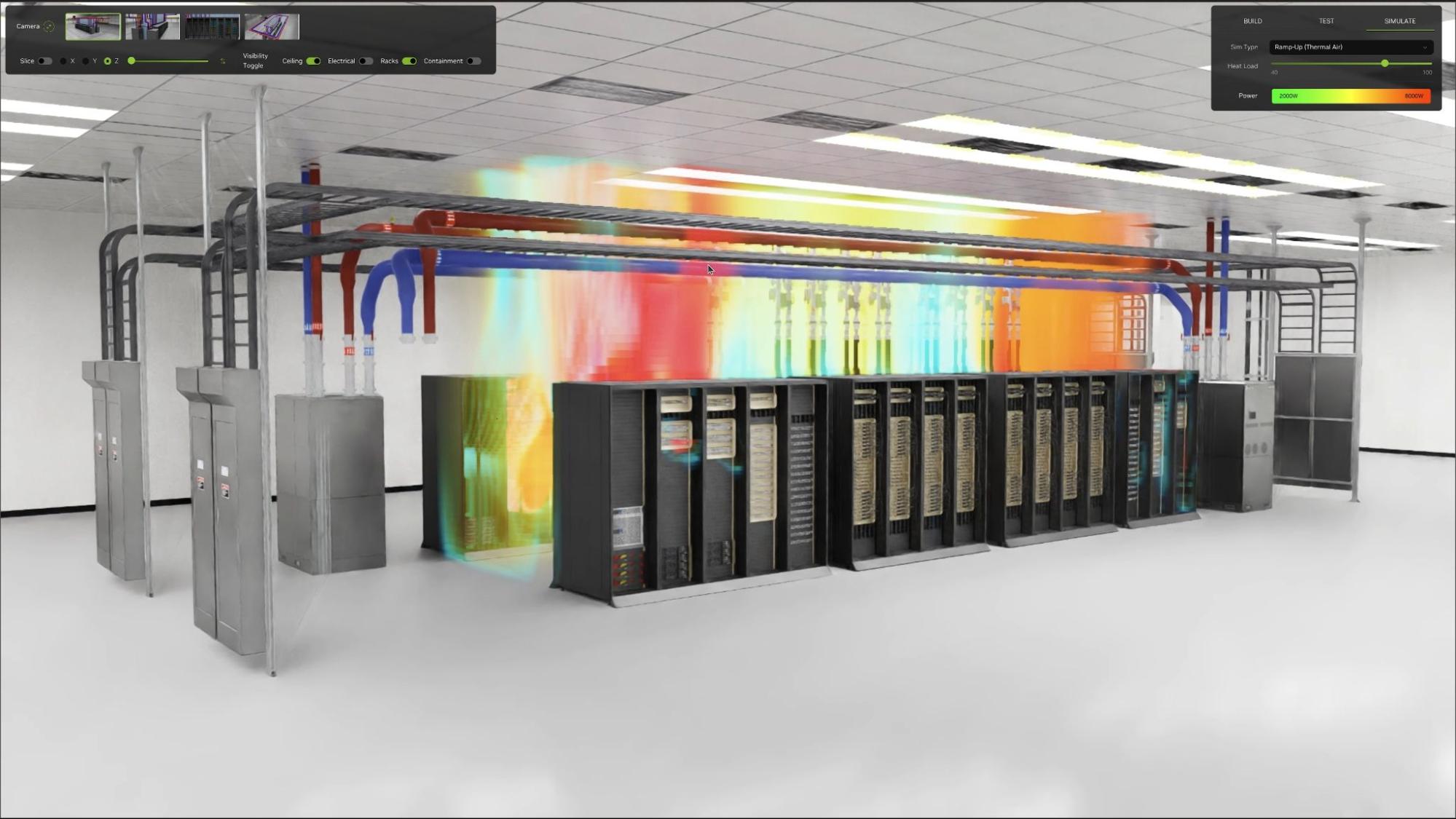
The inherently SimReady models within the blueprint are designed from the ground up to support physics-based simulations. This feature is particularly valuable for conducting rapid and large-scale industrial AI simulations that encompass essential aspects like power, cooling systems, and building automation.
Enhancing Infrastructure Development
The expansion of the Nvidia Omniverse Blueprint for AI factory digital twins symbolizes a crucial advancement in the industrial AI landscape. By providing a unified, physically accurate digital twin environment, formed on the solid foundations of OpenUSD and guided by SimReady standards, the blueprint simplifies the complexity involved in developing and operating AI factories.
As AI capabilities continue to evolve, the importance of efficient infrastructure design becomes increasingly clear. The Omniverse Blueprint allows engineers to de-risk developments, enhance performance, and accelerate AI factory deployment, setting the stage for the next wave of innovation in industrial applications.
Inspired by: Source


