


In a world where technology is rapidly advancing, stories like that of Harrell offer a glimmer of hope for individuals battling neurodegenerative diseases like Amyotrophic Lateral Sclerosis (ALS). As Harrell articulately expresses to MIT Technology Review, “Living with a disease like ALS, you are supposed to have diminished dreams. I do not.” His journey highlights the intersection of neuroscience and technology, paving the way for revolutionary advancements in communication.
The Breakthrough of Brain-Computer Interfaces
Harrell’s story begins three years ago, when he was grappling with the profound effects of ALS. By the age of 45, the disease had significantly hindered his mobility and ability to communicate, leaving him reliant on others for basic tasks. It was during this challenging time that Harrell took a significant leap of faith. He collaborated with David Brandman, an associate professor of neurological surgery at the University of California, Davis, and his research team. Recognizing the potential of brain implants to enhance communication, Harrell chose to participate in a groundbreaking trial.
The Implantation Procedure
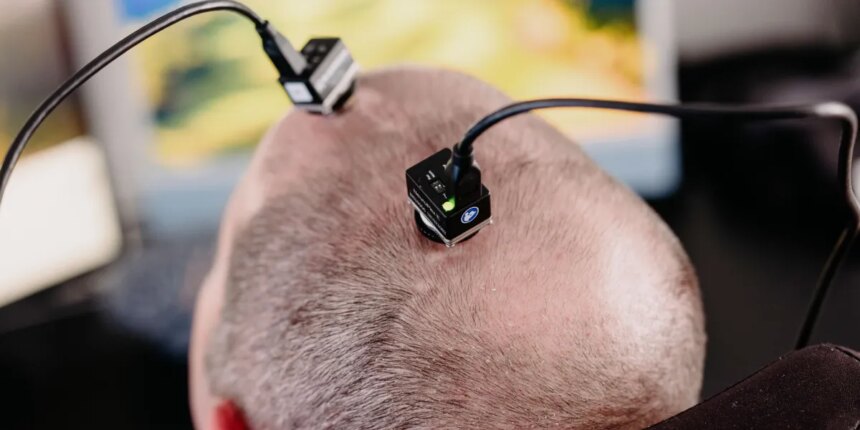
In July 2023, Harrell underwent a five-hour surgical operation where doctors implanted four arrays of 64 electrodes each into his brain. These electrodes were designed to capture and interpret the electrical signals produced by his brain activity when attempting to speak. To facilitate connectivity to the computer that would decode his thoughts into speech, each pair of arrays was linked to a “pedestal” connection point, creating two docking locations on his skull.
Decoding Neural Signals into Speech
At the core of this procedure lies the team’s innovative algorithms designed to decode brain activity into speech. The system primarily monitors the brain’s speech motor cortex, a crucial area responsible for orchestrating the muscle movements involved in speaking. This pioneering approach represents a significant advancement in the field of brain-computer interfaces (BCIs).
Personalized Speech Decoders
To turn neural activity into coherent speech, the researchers focused on the 39 phonemes that comprise the American English language. By mapping the brain’s activity associated with producing each phoneme, they were able to engineer a personalized speech decoder. As Nicholas Card, a neuroengineer at UC Davis, explains, “We first go from brain data to phonemes, and then from phonemes to words.” This transformative process enables individuals like Harrell to regain the ability to communicate effectively.
A Revolutionary Communication Tool
Just one month following the surgery, Harrell began utilizing the device. The results were astonishing. The team managed to get his speech decoder operational on the very first day. Initially equipped with a vocabulary of 50 words, Harrell achieved a staggering 99.6% accuracy in expressing his intended words. Over time, this vocabulary expanded dramatically to encompass 125,000 words, with an impressive accuracy rate of 97.5%.
The Impact on Daily Life
Harrell’s experience as a “power user” of this speech BCI has transformed not only his ability to communicate but also the overall quality of his life. Within just 22.6 months after the implantation, he had clocked more than 3,800 hours of device usage at home, often without the presence of researchers. This kind of autonomy is unprecedented for individuals living with ALS and marks a significant shift in how technology can empower those facing similar challenges.
A Future Full of Possibilities
As the team continues to refine the technology, Harrell’s optimistic outlook epitomizes the potential for similar advancements in the lives of others living with ALS and other neurodegenerative conditions. His statement, “Any one of these things would be an absolute godsend of improvement. To have all of them, and many, many more, is truly revolutionary,” resonates profoundly as we consider the limitless possibilities that lie ahead in the field of assistive technology.
Inspired by: Source


