


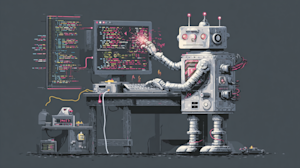
Google Unveils Antigravity: A New Era of Autonomous Coding
On Tuesday, Google launched a groundbreaking coding agent platform named Antigravity, designed to transform the way developer teams collaborate and automate complex tasks. Powered by Gemini 3, this platform is now available in public preview with generous rate limits, as highlighted in Google’s official blog post.
Antigravity: The Future of Coding
Antigravity marks a significant step toward an agent-first future, shifting the traditional integrated development environment (IDE) experience. This new platform focuses on browser control capabilities and asynchronous interaction patterns, allowing developers to interact with code agents in a more fluid and dynamic manner.
As enterprises grapple with an ever-expanding codebase—exacerbated by AI code generation—they are turning to asynchronous coding agents for help. Google’s Antigravity aims to provide the tools necessary for developers to review code projects, evaluate components, and perform tasks independently, thereby streamlining development processes.
What Makes Antigravity Unique?
For the public preview, developers can build agents using a variety of advanced models, including Gemini 3, Anthropic’s Sonnet 4.5, and OpenAI’s open-source gpt-oss. This compatibility extends across major operating systems like macOS, Linux, and Windows, making it accessible to a wide audience.
Google has articulated a clear vision for Antigravity: to become the home base for software development during the agent era. The intention is to empower anyone with an innovative idea, enabling them to transform that idea into a tangible reality.
More Read

Four Key Tenets of Antigravity
Antigravity is founded on four core tenets that distinguish it from existing coding platforms: trust, autonomy, feedback, and self-improvement.
Trust
Transparency is crucial in building trust among developers. Google aims to strike a balance by providing meaningful context regarding agentic work at a granular task-level abstraction. Instead of simply producing code, Antigravity emphasizes a comprehensive verification process. This involves ensuring that agents not only accomplish tasks but also thoroughly understand the rationale behind their work.
Autonomy
Antigravity’s main interface, called Editor View, mimics a conventional IDE experience, allowing the agent to navigate its environment while accomplishing tasks. The upcoming feature, an agent-first Manager surface, will invert this concept by embedding the interface within the agent, enhancing the autonomy of the coding agent even further.
Feedback Mechanism
User feedback is integrated throughout every aspect of Antigravity. This continuous feedback loop allows agents to adapt and evolve without necessitating human intervention. Developers can work alongside agents more seamlessly, maintaining productivity while enabling the agent to refine its execution in real time.
Self-Improvement
As developers collaborate with agents, self-improvement becomes a crucial aspect. Antigravity agents can access a knowledge base to learn from past experiences and incorporate new insights, leading to a more intelligent and capable coding assistant.
Google’s Broader Ecosystem of Coding Agents
Antigravity is not Google’s sole offering in the coding agent space. It joins a suite of platforms designed to enhance developer efficiency. For instance, Jules, a coding assistant integrated into various IDEs, allows invocation via command-line interfaces while also functioning asynchronously. Furthermore, the Gemini CLI shares similar operational parameters, and Gemini Code Assist was introduced last year.
However, Antigravity must compete in a crowded marketplace filled with established players such as OpenAI’s Codex, Claude Code from Anthropic, and Cursor. Early users have reported mixed experiences with the platform—some have highlighted issues with errors and slow generation, indicating that there’s still room for improvement.
Initial User Reactions
Antigravity’s reception has been diverse. While some users are excited about the potential of autonomous coding agents, others have encountered challenges like bugs and sluggish performance. Insights from developers using the platform in its early days provide valuable perspectives that Google may use to enhance the user experience further.
Strategic Moves: The Windsurf Acquisition
Interestingly, Antigravity draws some design inspiration from Windsurf, a team that Google acquired for $2.4 billion in July. Led by CEO Varun Mohan, the Windsurf team has reportedly contributed to the foundational aspects of Antigravity, showcasing Google’s commitment to leveraging existing innovations to develop new products.
As Google steers its advancements in coding technology, the landscape of development environments is poised for a significant evolution. With technologies like Antigravity paving the way, the future of coding promises to be faster, more efficient, and increasingly autonomous. So as developers continue to explore the capabilities of Antigravity, the full impact of this revolutionary platform remains to be seen.
Inspired by: Source


