


Unveiling Vercel Drains: Streamlining Observability Data for Developers
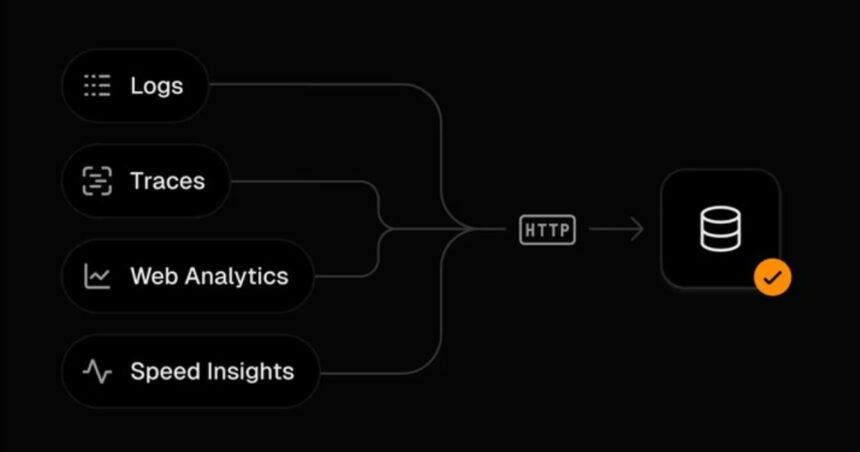
Vercel has recently rolled out a groundbreaking feature known as Vercel Drains, designed to enhance the way developers export and manage observability data from their applications. This innovative system consolidates logs, distributed traces, web analytics events, and performance metrics into a single, unified streaming mechanism. Let’s dive deep into the features and advantages of Vercel Drains and how it stands out in the current landscape of observability tools.
What is Vercel Drains?
Vercel Drains offers a streamlined approach to exporting observability data, making it easier for developers to connect their Vercel projects with external monitoring and analytics services. This new capability encompasses various types of logs, including runtime, build, firewall, function, and static asset logs. With this feature, the handling of observability data becomes less fragmented, allowing teams to focus on analysis rather than infrastructure management.
Comprehensive Data Coverage
One of the standout features of Vercel Drains is its ability to export a wide range of observability data, including:
- OpenTelemetry Compatible Trace Data: This ensures that traces from Vercel applications can be easily integrated with other observability tools.
- Web Analytics Data: Developer teams can now export vital information such as page views and custom events, which are crucial for understanding user interactions.
- Speed Insights Metrics: Core Web Vitals are part of the package, enabling developers to monitor and improve performance effectively.
Given that Vercel controls the entire request path from the client to serverless execution, log entries are automatically enriched with traceId and spanId. This means logs and traces are interconnected without requiring additional setup, vastly simplifying the workflow.
Flexible Configuration Options
Setting up Vercel Drains is straightforward. Developers can configure their data export using two primary methods:
More Read

- HTTP Drains: Custom endpoints allow for flexible format options, sampling, and signature setups.
- Integration Drains: These connect directly with leading observability vendors, enabling seamless information flow into platforms like Datadog, Honeycomb, Grafana Tempo, and New Relic.
This flexibility means that developers can easily adapt Vercel Drains to fit their existing workflows, regardless of the tools they are already using.
Comparing Vercel Drains with Existing Tools
In the market today, numerous tools provide observability capabilities, such as AWS CloudWatch, Google Cloud Operations, and Azure Monitor. While these solutions offer log collection and tracing within their specific ecosystems, Vercel Drains stands apart by offering a more unified method of exporting observability data that transcends any single vendor’s limitations.
Open-source alternatives like Fluent Bit and OpenTelemetry Collector also exist, yet they often require more setup and management. Vercel Drains provides a managed solution that reduces the overhead of maintaining custom observability pipelines and allows teams to concentrate on gaining insights from their data.
Developer Feedback and Community Reception
The release of Vercel Drains has not gone unnoticed in the developer community. Many have expressed excitement over this new feature, highlighting how it simplifies the connection of Vercel projects to existing monitoring stacks. Software developer Virat Mankali summed it up aptly:
“Next-level observability just dropped! The unified sync across traces, analytics, & logs—plus 1-click export? Absolutely game-changing for dev workflows.”
Aparna Sinha, Product Manager at Vercel, emphasized the feature’s importance in providing real-time observability data that meets the diverse needs of enterprises:
“Vercel drains give you real-time observability data you can use in a tool of your choice, because enterprises have many tools and teams who need different cuts.”
Reducing Fragmentation in Observability
One of the key advantages of Vercel Drains is its potential to reduce fragmentation in observability pipelines. By providing a consolidated layer for exporting metrics, logs, and traces, teams may spend less time managing their infrastructure. This simplification allows them to focus on higher-value activities, such as analyzing performance data and making informed decisions.
Furthermore, organizations are likely to find it easier to switch between observability vendors because Vercel’s unified export mechanism minimizes the need for extensive reworking of applications.
Configurability for Teams and Projects
Users can easily set up multiple drains tailored to different teams and projects. Access to configuration options is available through the Vercel dashboard under Team Settings, ensuring that developers can manage their observability setup in a centralized and user-friendly manner.
With Vercel Drains, observability continues to evolve, empowering developers to take command of their data and insights in ways that were previously unfeasible. The future of observability is here, and it’s unified, flexible, and incredibly powerful.
Inspired by: Source


