


The Evolution of AI in Protein Structure Prediction
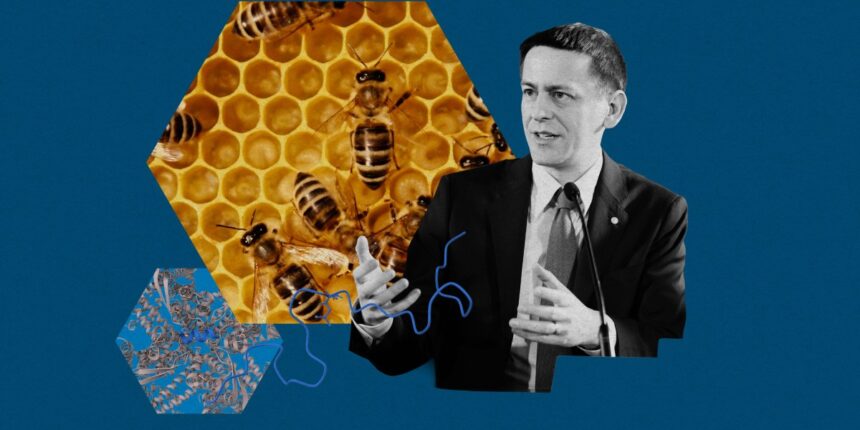
In recent years, artificial intelligence has increasingly made its mark on the field of biology, transforming how scientists approach the complex question of protein structures. This paradigm shift can largely be traced back to groundbreaking innovations in AI technology, particularly the work done by John Jumper and his team at Google DeepMind, notably with the development of AlphaFold 2.
From Academic Roots to Revolutionary AI
John Jumper, freshly armed with a PhD in theoretical chemistry in 2017, was drawn to the buzz surrounding a secretive project at Google DeepMind that aimed to tackle the challenges of protein structure prediction. Protein structures are essential for understanding biological functions and developing drugs, and traditional methods for determining these structures can be painstaking and time-consuming.
Jumper’s curiosity led him to apply for a position at DeepMind, where he would soon find himself at the forefront of a scientific revolution. In just three years, Jumper and CEO Demis Hassabis spearheaded the creation of AlphaFold 2, an AI system capable of predicting protein structures with astonishing accuracy—matching laboratory results and significantly cutting down the time required for such predictions from months to mere hours.
AlphaFold 2: A Quantum Leap in Science
What makes AlphaFold 2 remarkable is its unique approach to predicting protein folding—a complex process influenced by numerous factors at the molecular level. The system utilizes advanced machine learning techniques to analyze vast datasets of known protein structures and leverage this information to generate predictions for new proteins.
With an accuracy nearing the width of an atom, AlphaFold 2 has not only accelerated research but has also opened up new avenues for discovery. The AI’s performance in the biennial Critical Assessment of protein Structure Prediction (CASP) competition stunned the scientific community, shifting paradigms in both computational biology and structural chemistry.
More Read

Impact on the Scientific Community
Since its launch, AlphaFold 2 has been widely adopted in various research labs, expanding the horizons of molecular biology. Scientists are now using this technology to unravel the mechanisms of diseases, design novel proteins for therapeutic purposes, and even explore the potential for biotechnology applications.
Several high-profile research articles have already emerged from studies employing AlphaFold 2, indicating its ability to not only streamline existing workflows but also inspire new research inquiries. As researchers delve into the intricacies of protein functions, they are employing AlphaFold’s insights as a foundational resource.
A Nobel Prize for Innovation
The significance of AlphaFold 2 was further underscored when Jumper and Hassabis were awarded the Nobel Prize in Chemistry. This accolade highlights the critical role of artificial intelligence in advancing our understanding of biology. It also signals a broader recognition of how inter-disciplinary collaboration between computer science and biology can yield innovations that dramatically shift scientific paradigms.
Companion AI: A New Frontier
While the scientific community celebrates breakthroughs like AlphaFold 2, another facet of AI is making waves—companion AI. As highlighted in a recent study, many individuals are now utilizing generative AI to create personalized chatbots that serve as companions. Whether as friends, therapists, or even romantic partners, these AI systems fulfill emotional and social needs, marking a shift in how we perceive and interact with technology.
State governments are already beginning to recognize the implications of companion AI, particularly concerning user privacy. However, current regulations often fall short in addressing these critical issues, leaving users vulnerable and raising questions about the ethical use of AI in personal spaces.
The Future of AI in Science and Society
The current landscape of AI, exemplified by both AlphaFold 2 and the rise of companion AI, illustrates a future where technological advancements intersect deeply with human experience. As we continue to harness the power of AI across disciplines, the potential for transformative breakthroughs in science and our everyday lives remains vast.
From the intricate world of protein structures to the emotional landscapes navigated by chatbots, AI is not just a tool—it’s becoming an integral partner in shaping our understanding of both the natural world and our social interactions.
Exploring these dimensions not only enhances our scientific pursuits but also challenges us to consider the ethical implications of our creations as we forge ahead into an AI-driven future.
Inspired by: Source


