


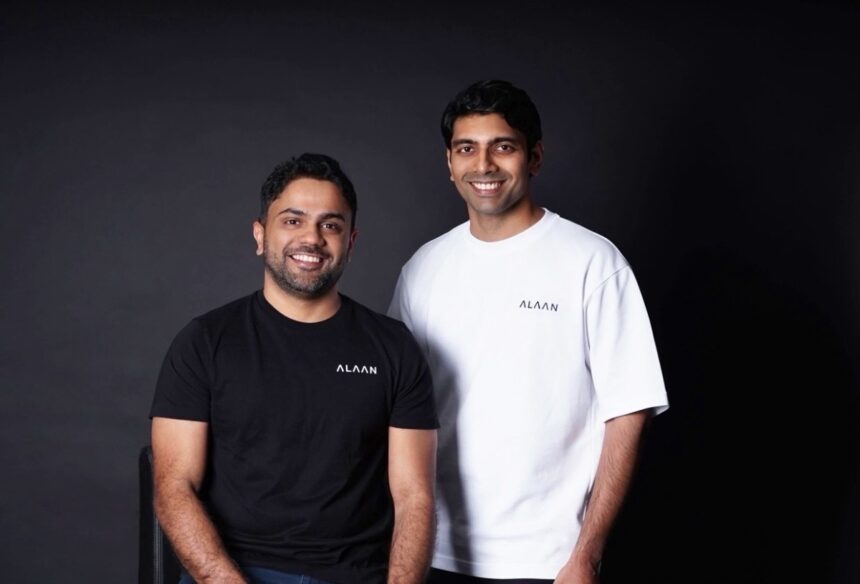
Revolutionizing Spend Management in the MENA Region: The Rise of Alaan
When Parthi Duraisamy was working as a consultant at McKinsey & Company in Dubai, he faced a frustrating challenge: the American Express cards that his company relied on for corporate expenses were seldom accepted in the Middle East. This led to significant out-of-pocket expenses and the tedious task of submitting multiple expense reports.
"A constant pain," Duraisamy recalled. "Weekends were spent uploading receipts and manually reconciling every expense."
Out of this struggle, Alaan was born—a cutting-edge spend management platform that has quickly become the leading solution in the Middle East. Recently, Alaan announced a significant milestone: raising $48 million in Series A funding, led by Peak XV Partners (previously Sequoia Capital India & SEA). Notably, the round saw participation from renowned backers such as 885 Capital, Y Combinator, and others.
The platform’s potential has captured the attention of notable investors, including founders of successful regional startups like Tabby and Careem, as well as Khalid Al Ameri, a prominent YouTuber in the region. This funding round is one of the largest in the MENA fintech space, emphasizing Alaan’s market-leading position.
Acknowledging the Challenges
Despite this significant success, the journey to establishing Alaan was not without hurdles. After securing a modest $2.5 million seed funding in mid-2021, the company struggled to launch for nearly a year due to complex regulatory environments and the need for essential banking partnerships within the UAE.
More Read

Expanding into Saudi Arabia presented similar challenges, as Alaan had to endure lengthy waiting periods to get approvals from the country’s apex bank before it could officially launch in January of this year. "The biggest challenge we faced, both in the UAE and Saudi Arabia, was simply going live," shared the CEO.
Innovations and Early Setbacks
In the fintech landscape, speed is often essential. Alaan quickly made strides by integrating Apple Pay into its B2B offerings, a feature previously unavailable to finance teams in the region. This pioneering integration allowed businesses to embrace modern payment solutions.
In early 2023, the company became the first in the Middle East to incorporate OpenAI into its services. Initially, Alaan experimented with a chatbot, aiming to enhance user interactions around spending. However, this feature did not resonate with users as anticipated. Learning from this experience, Alaan pivoted towards utilizing AI behind the scenes to improve efficiency in processes such as receipt matching, reconciliation, and VAT extraction. This adjustment proved vital in navigating the region’s complex VAT regulations and facilitating tax reclaim processes for businesses.
Impact on Finance Teams
These innovations have not gone unnoticed. Alaan claims its platform has saved finance teams over 1.5 million hours of manual work since its launch. With a growing emphasis on automating these processes, Alaan is poised to enhance productivity for finance professionals further.
Since its inception in 2022, Alaan has processed over 2.5 million transactions for more than 1,500 finance teams across leading enterprises, including G42, Careem, Tabby, and Lulu Group. Remarkably, Alaan has reached profitability, generating $10 million in revenue from a spending base of $5 million—demonstrating a disciplined approach in a sector often characterized by heavy spending on growth.
Expanding Horizons in Saudi Arabia
Currently, Alaan is focused on replicating its success in Saudi Arabia. Having launched there earlier this year, the platform reports a consistent doubling of transaction volumes over the past six months. The latest Series A funding will enable Alaan to boost its hiring across sales, customer success, and compliance while doubling down on its AI-driven finance automation initiatives.
While some industry observers draw parallels between Alaan and rapidly growing U.S. fintechs like Ramp, Duraisamy is grounded in the underlying fundamentals. “What really matters for a company at our stage is our capital efficiency, revenue generation, and strong go-to-market strategy,” he stated, emphasizing that Alaan’s distinct circumstances and robust fundamentals would have attracted significant investment regardless of broader market comparisons.
Looking Ahead
With a foundation built on addressing real-world challenges and a commitment to continuous innovation, Alaan is not just reshaping the fintech landscape in the MENA region; it’s also setting the stage for future growth, ensuring that finance teams can operate efficiently in an increasingly complex financial landscape. As they continue to invest in automation and customer-centric solutions, the fintech’s trajectory looks promising—not just for its growth, but also for the businesses it empowers.
Inspired by: Source


